Recovering value from broken pottery and the artisans who shape it.
Matkarma is a cooperative-led service that turns the 25–30% of pottery lost to breakage into recovered income for artisans without asking them to use a single new digital tool.
Indian potters lose roughly a third of every batch to breakage. There is no system to recover any of it. I designed a hub-and-spoke cooperative, physical collection points run by field officers, that pays artisans on the spot for broken pieces, then routes the inventory into a layered marketplace. The artisan never touches an app.
One of the world's oldest crafts, and one of its most overlooked.
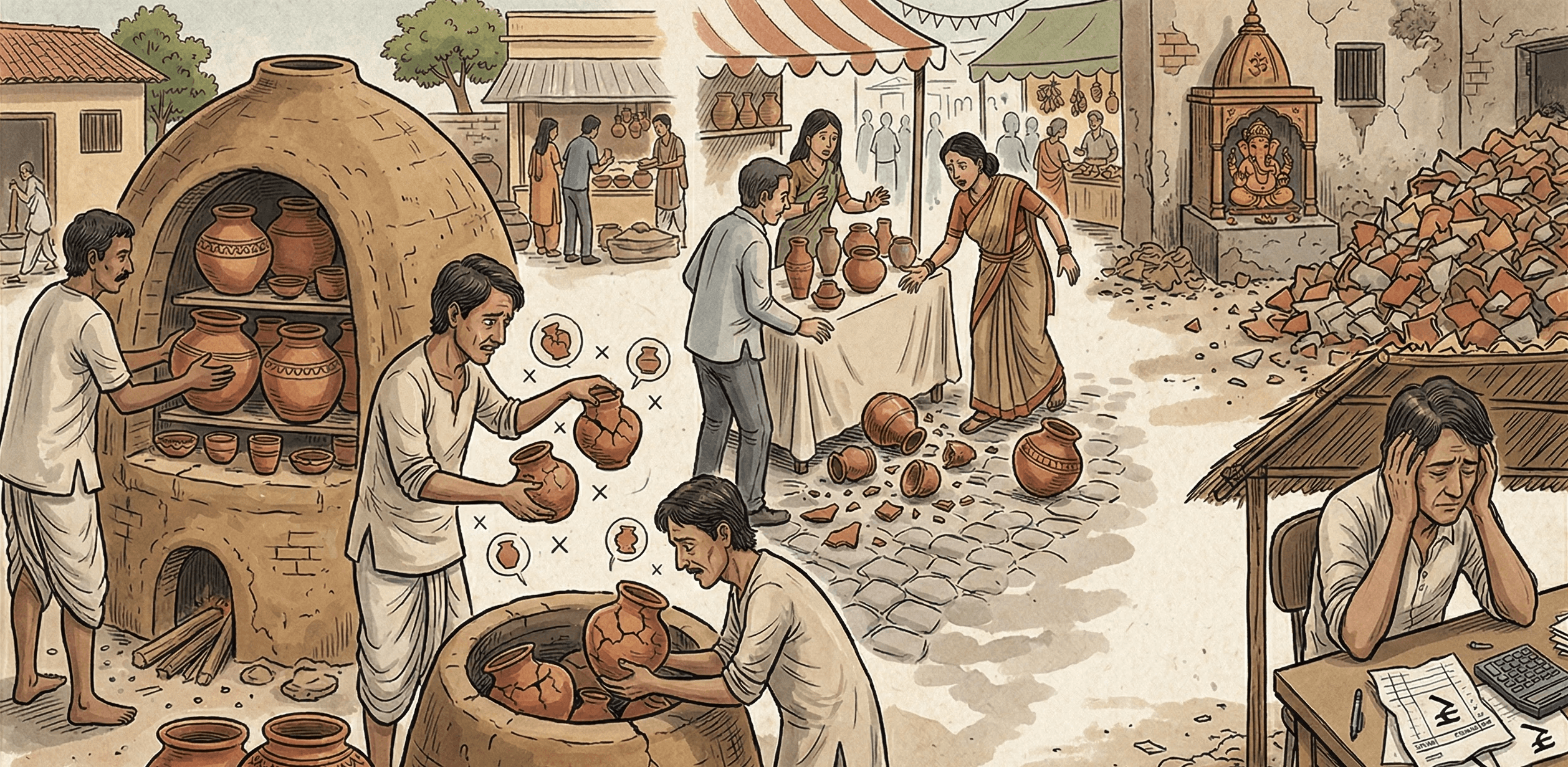
Indian pottery demands precision, intergenerational skill, and decades of practice. It also sits at the bottom of the craft economy. A single bad firing erases a week of work, and there is no insurance, no recovery system, no second life for the pieces that don't make it.
The breakage is constant. The recovery system doesn't exist.
The three costs compound. Material is lost (clay, glaze, fuel). Labour is lost (hours at the wheel, days of drying, a full kiln cycle). And the most cited frustration in interviews wasn't money, it was watching perfectly good work become trash.
This isn't a marketing problem or a fairer-pricing problem. It's an infrastructure problem.
I went to where the wheel turns.
I wanted the workflow under my fingernails, not a checklist of pain points.
Contextual inquiry
Two weeks across pottery clusters in Hyderabad and Pune.
Long-form interviews
12 potters and 6 sellers.
Hands-on practice
Time on the wheel myself.
Three observations that shaped the brief.
- 01
Storage is a burden, not just a cost.
Workshops accumulate sharp ceramic piles.
- 02
There's no mental model for sorting.
Broken pieces are undifferentiated trash.
- 03
The digital divide is real.
Most artisans don't own a smartphone.
04 Field Research
What I saw in the workshops, drying yards, and markets.
Two weeks across pottery clusters in Hyderabad and Pune. Watching the wheel turn, sitting through firings, and listening to what frustrated artisans the most.
Field visit · pottery cluster in Hyderabad
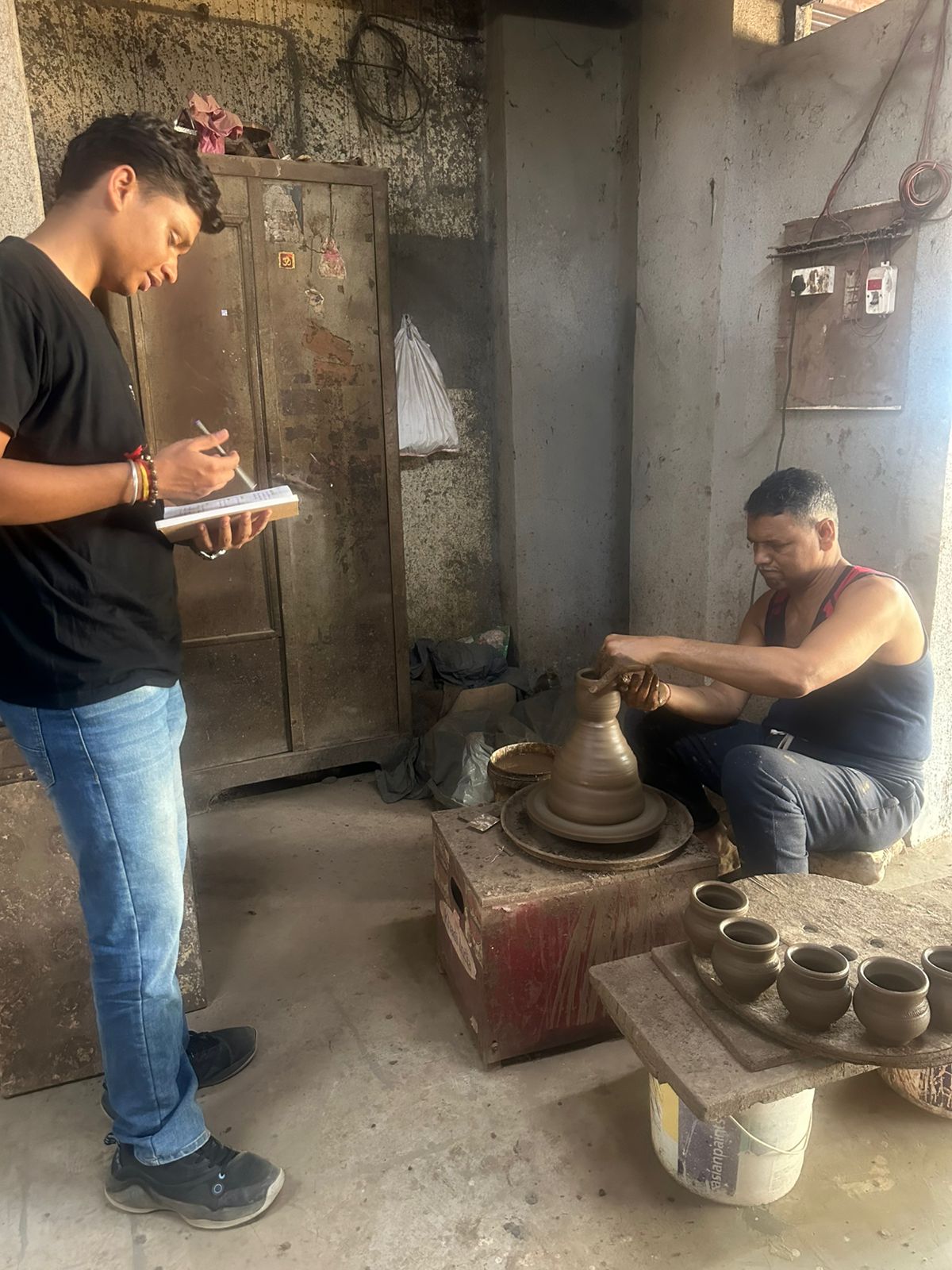
Interview · discussing journey and frustrations
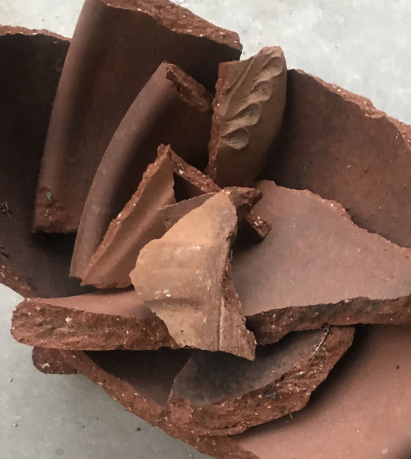
Observation · broken pieces, shapes & sizes
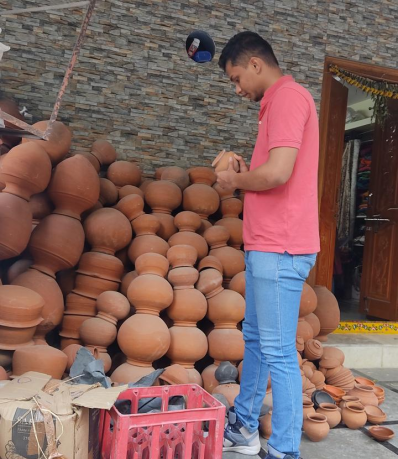
Inspecting · how she organizes her stock
Observing the process, end to end.
Preparing and mixing the clay
Shaping the clay on a wheel
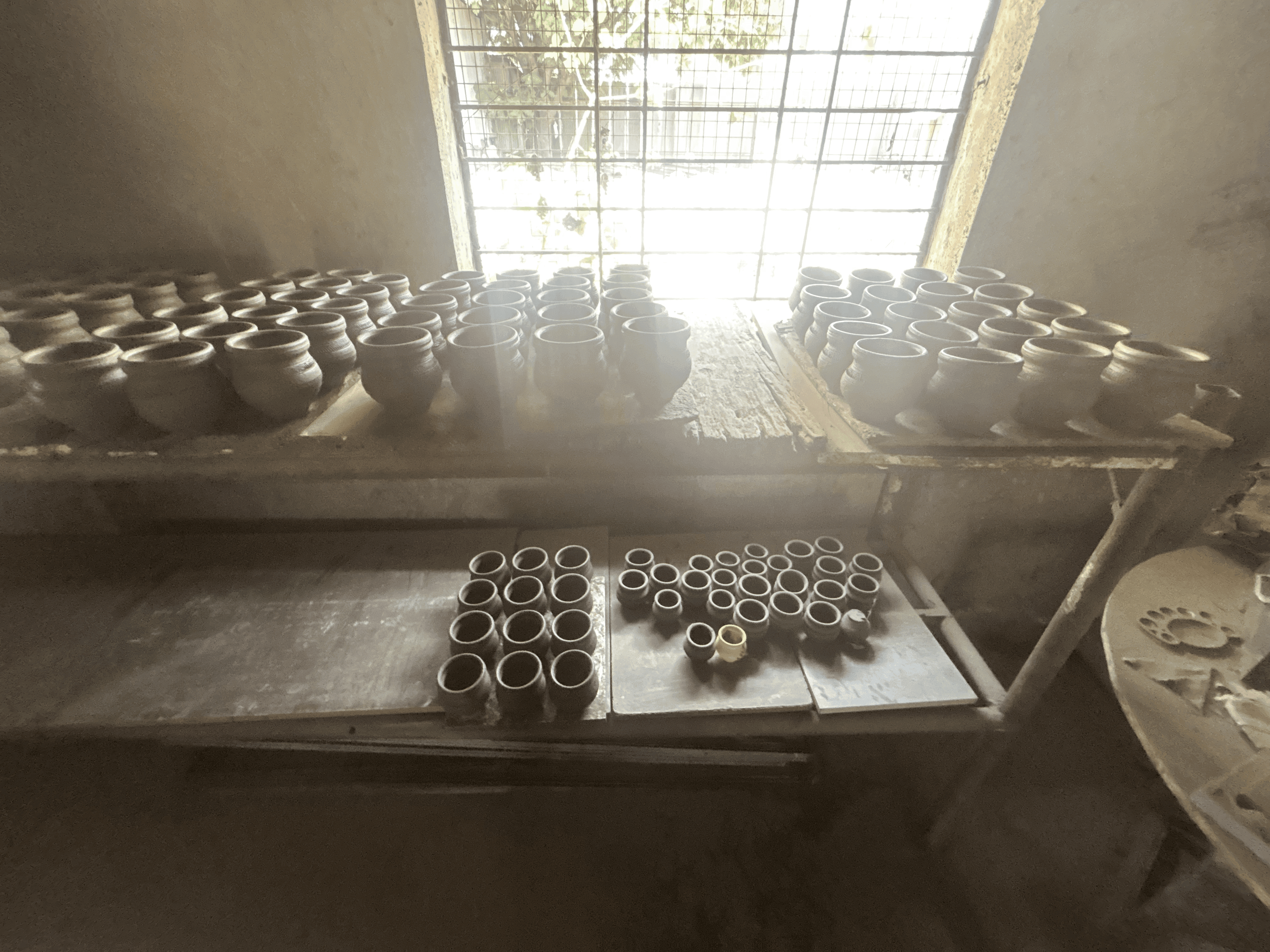
Placing the shaped pots out to dry
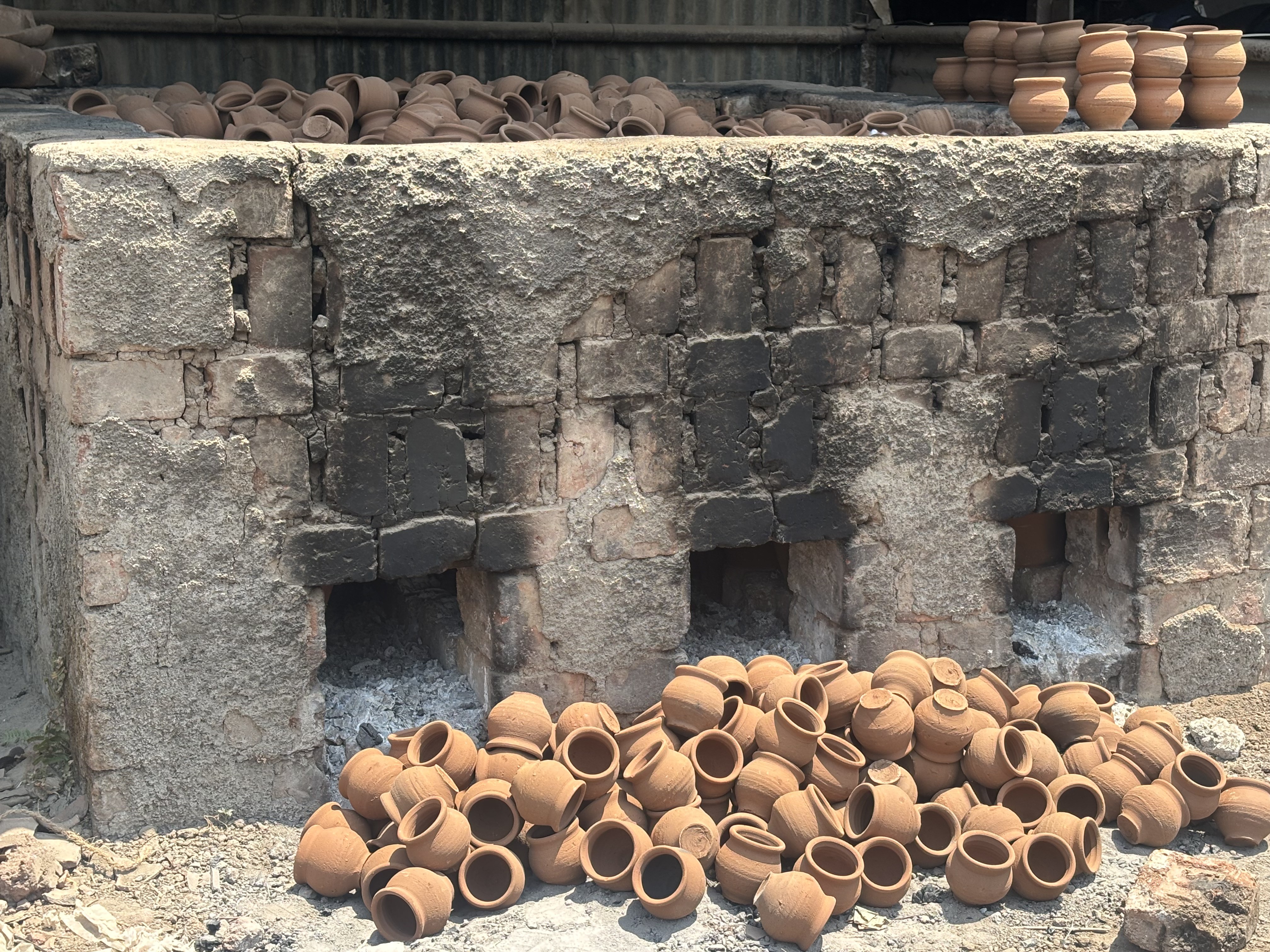
Firing the pots in a kiln
Hands on the wheel.
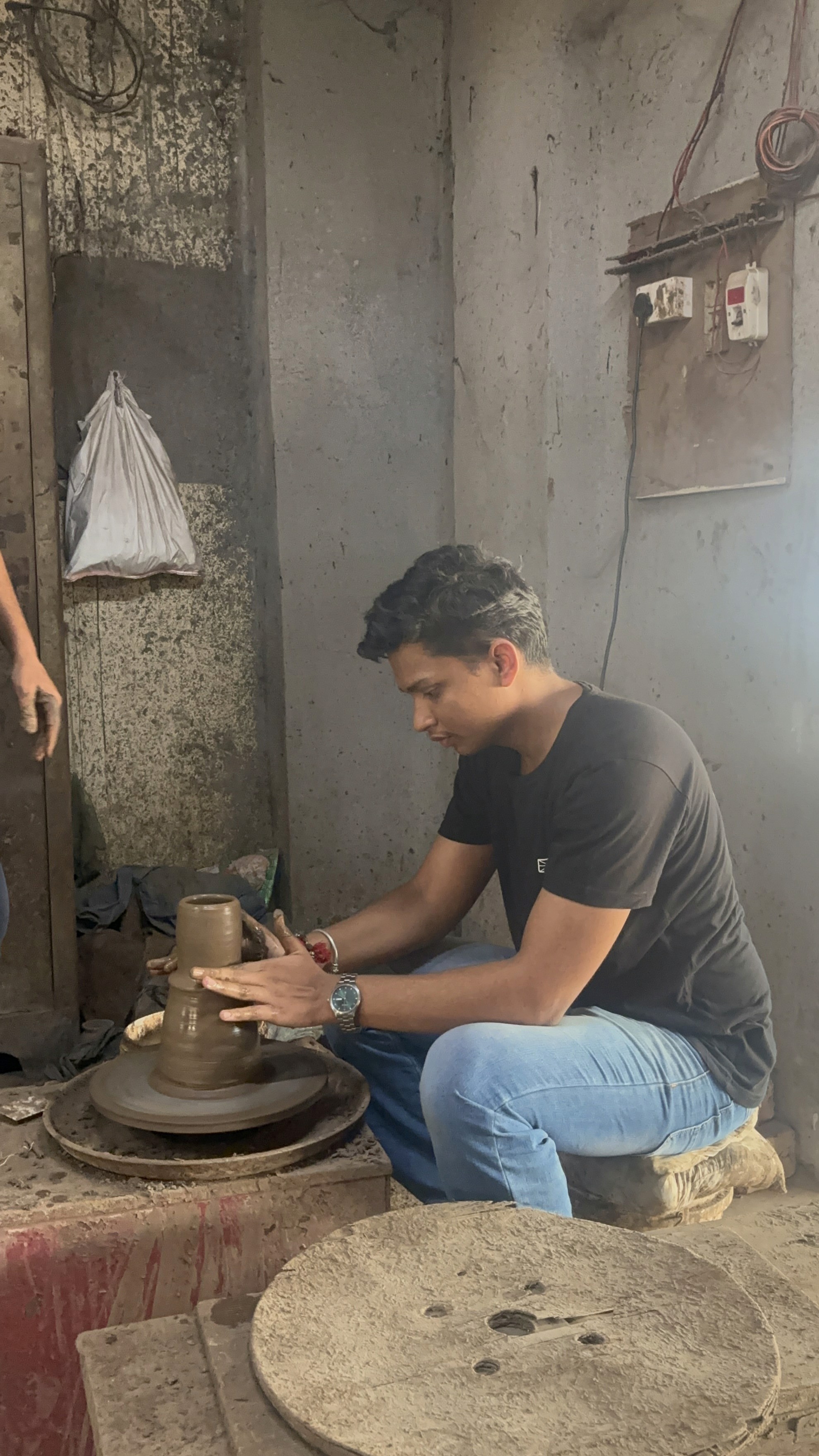
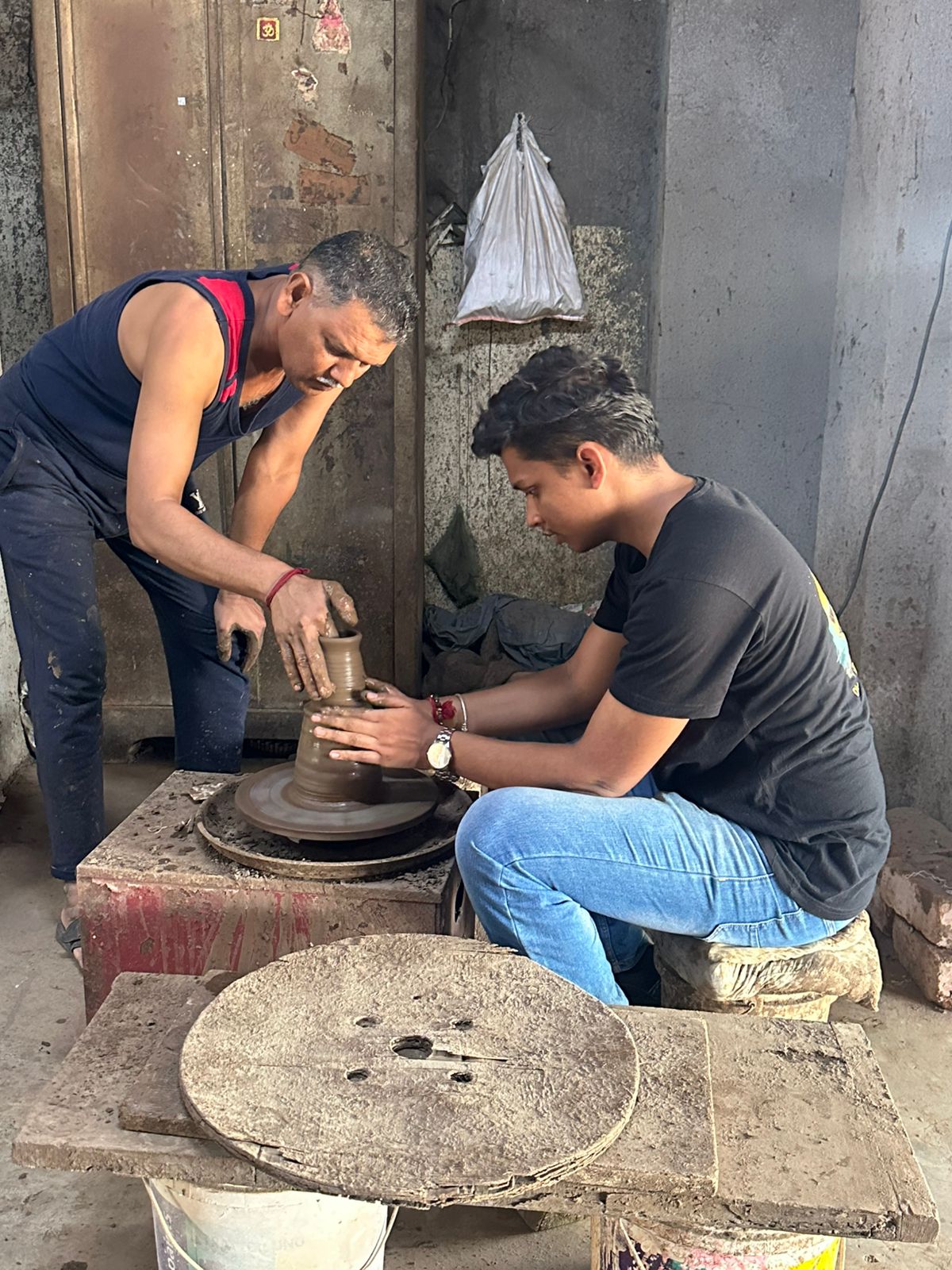
Time at the wheel · learning what it takes to make a single pot
05 Two Voices
Bhagyamma and Ramesh.
Two interviews that shaped how the service needed to behave, what to build around, and what to never put on the artisan.
The labour of recovery shouldn't fall on the person already absorbing the loss.
Any solution that placed new digital work on the potter, listing, photographing, sorting, would re-tax the artisan who was already losing the money. That single decision shifted everything that came after it.
How might we recover the financial losses from broken pottery by building infrastructure around the artisan, rather than putting tools in their hands?
MatKarma
Matka + Karma
(Pot) (Fate)
The logo shows a broken pot held gently by hands, symbolizing care and giving new life to discarded pieces.
It reflects MatKarma’s mission of upcycling pottery and believing in second chances.
Matkarma is a cooperative, not an app.
A hub-and-spoke system modelled on India's dairy cooperatives. Potters drop off broken pottery and receive cash on the spot. Hubs handle sorting, photography, packaging, and sales. Revenue flows back through fair pricing and an annual dividend.
Physical
Kumhar Kendras — small hubs inside pottery clusters.
Human
Field officers on motorbikes. Weekly routes.
Digital
Two apps — buyer marketplace and a field-officer tool.
From cracked pot to sold mosaic, in seven steps.
Every step has a clear owner. The potter only owns step one. From step two onwards, the system takes over.
One inventory, three channels.
A single marketplace can't make broken pottery's unit economics work. Layering channels solves it.
The Marketplace
High-margin, brand-building.
- – DIY mosaic & craft kits
- – Raw shards by weight & colour
- – Finished art by Tier-2 artisans
- – Subscription craft boxes
- – Urban workshops
Bulk & Trade
Where volume lives.
- – Mosaic tiles for architects
- – Drainage terracotta
- – Bulk material for art schools
- – Studio supply
- – Cafe & restaurant decor
Co-Creation & CSR
Partnerships that extend reach.
- – Co-branded sustainable decor
- – Corporate gifting
- – Carbon-credit certified runs
- – Hotel custom installs
- – Government tie-ups (Phase 3)
One app for the buyer. One for the field.
Two phones, two users. Neither of them is the artisan.
Marketplace
Browse shards, kits, and finished art. Order with delivery or pick up from a partner studio.
Field App
Weigh, grade, photograph, and pay the artisan on the spot. Every collection logged automatically.
Three doors. The artisan picks which to walk through.
Some potters stay potters. Some upskill. A few are digitally fluent.
Drop & Done
- WHO
- Most potters.
- TIME
- Zero beyond setting shards aside.
- TECH
- None required.
Artisan Maker
- WHO
- Potters who upskill.
- TIME
- A few hours / week.
- TECH
- None.
Direct Seller
- WHO
- Digitally fluent potters.
- TIME
- Self-managed.
- TECH
- Smartphone + onboarding.
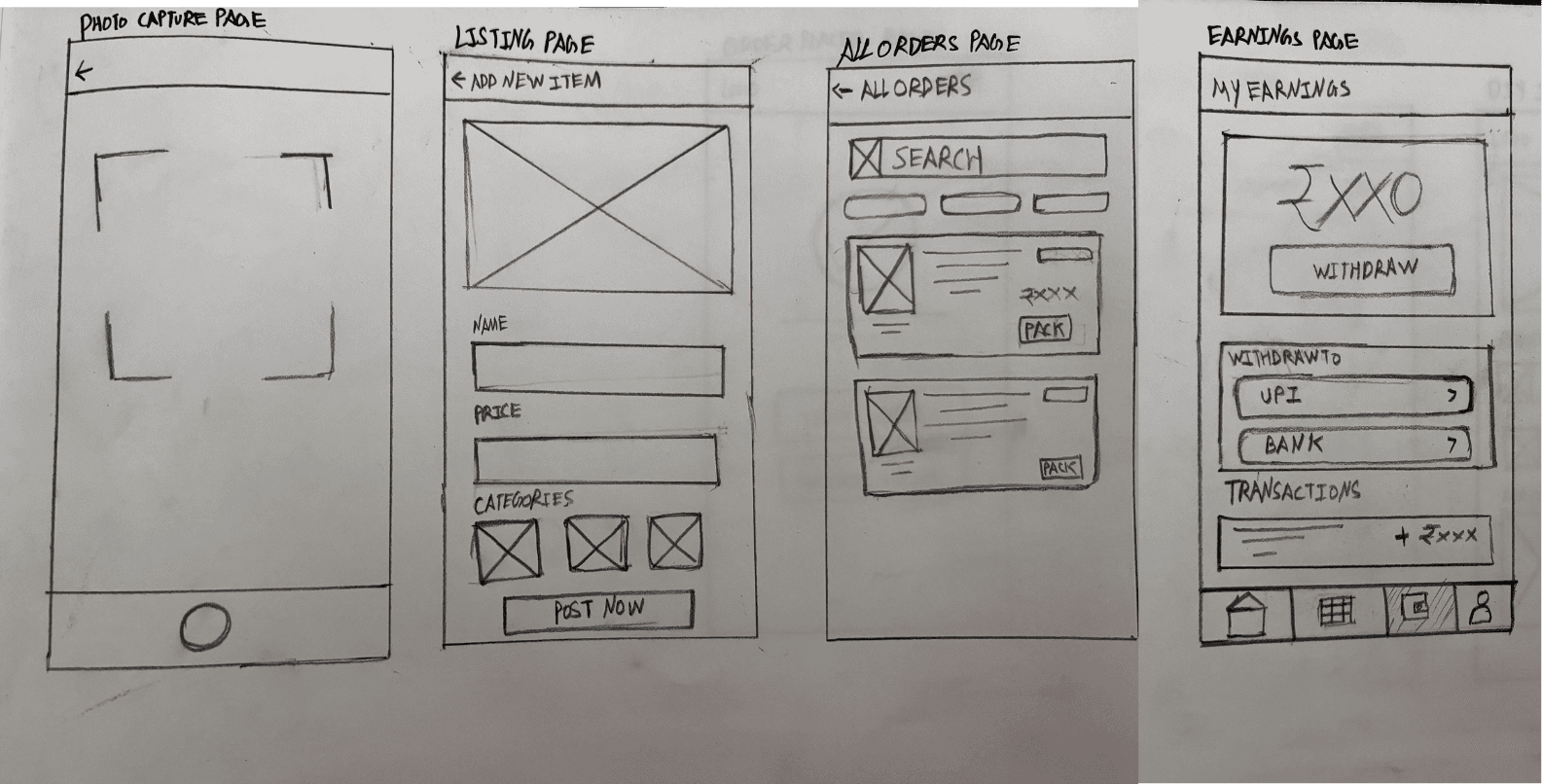
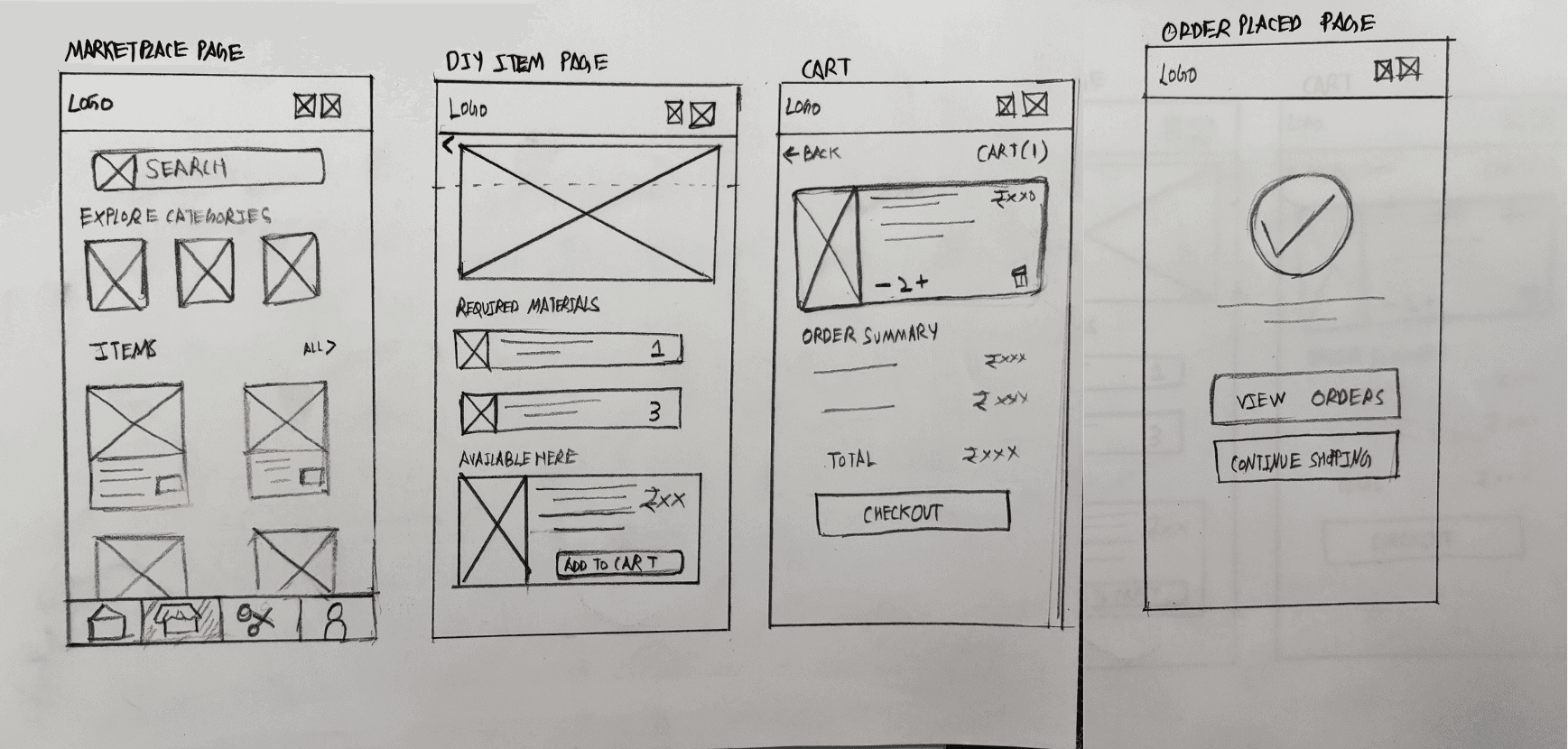
12 Wireframes
Early sketches and structural thinking.
Low-fidelity wireframes that mapped out the core flows, layout decisions, and interaction patterns before moving to visual design.
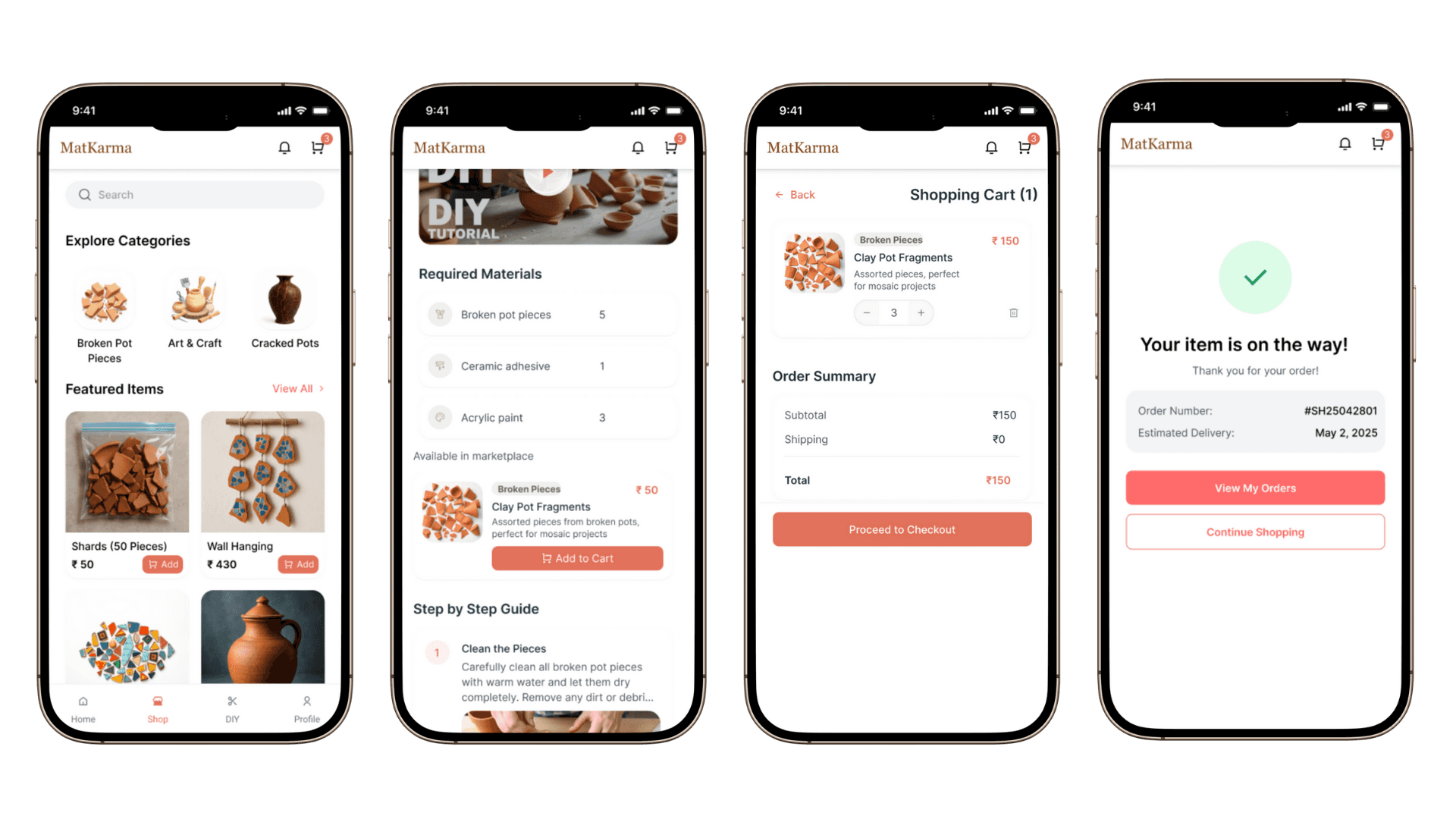
13 High Fidelity Screens
Polished screens and interactive prototype.
Final UI designs brought to life with the full visual language ready for handoff and testing.
The questions that decide whether this works.
A cooperative fails on operations, not on idea.
01Geographic isolation
Remote villages.
ResolvedMobile collection vans.
02Trust
Middlemen history.
ResolvedCash on the spot. Public rate card.
03Seasonal cashflow
Festival-driven demand.
ResolvedAdvance against future inventory.
04Sharp shard logistics
Heavy, sharp, dangerous.
ResolvedPPE-trained staff. Standard bins.
05Bypass risk
Direct buyer access.
ResolvedCuration, grading, logistics.
06Quality disputes
Value disagreements.
ResolvedFive-grade scale. Photo-on-intake.
07Festival surges
Capacity cracks.
ResolvedModular hub design.
08Plastic competition
Margin squeeze.
ResolvedParallel eco-conscious market.
Prove one cluster. Then ten. Then a state.
A cooperative scales by replication, not deployment.
One cluster, one hub
Single Kumhar Kendra. 2 field officers, 50 potters.
- –Do potters return?
- –Unit economics work?
- –Buyer NPS?
Five clusters, B2B opens
Replicate across four more clusters.
- –Brand partnerships
- –Tier-2 training
- –Cooperative registered
National + government
State handicraft boards, KVIC, MSME.
- –20+ hubs
- –Digital literacy programs
- –5,000+ potters
What success looks like at pilot scale.
Targets modelled against year-one pilot (50 potters, 1 hub). Figures define what the system has to deliver to be worth replicating.
The hardest design decision was where to design.
For most of this project, the obvious move was to build something: an app, an interface, a product.
The strongest design move I made was a subtraction: pulling the smartphone out of the potter's hands.
Designing for a user and designing around a user are different jobs.