Matkarma: A B2C circular economy marketplace
Type
B2C Marketplace & Service Design
My role
UI/UX Designer
Duration
3 Weeks
Context
Pottery, one of the oldest professions in the world, involving significant skills and precision is overlooked these days, this sector faces many problems and lacks major interventions and support. This case study tackles one such major problem : the loss of time, value and money incurred due to pots breakage.
01. The Problem
Professional potters and pot sellers face significant challenges with broken and failed ceramic pieces, resulting in material waste, financial losses, and environmental impact. Currently, there is no systematic approach to managing or repurposing these broken pieces.
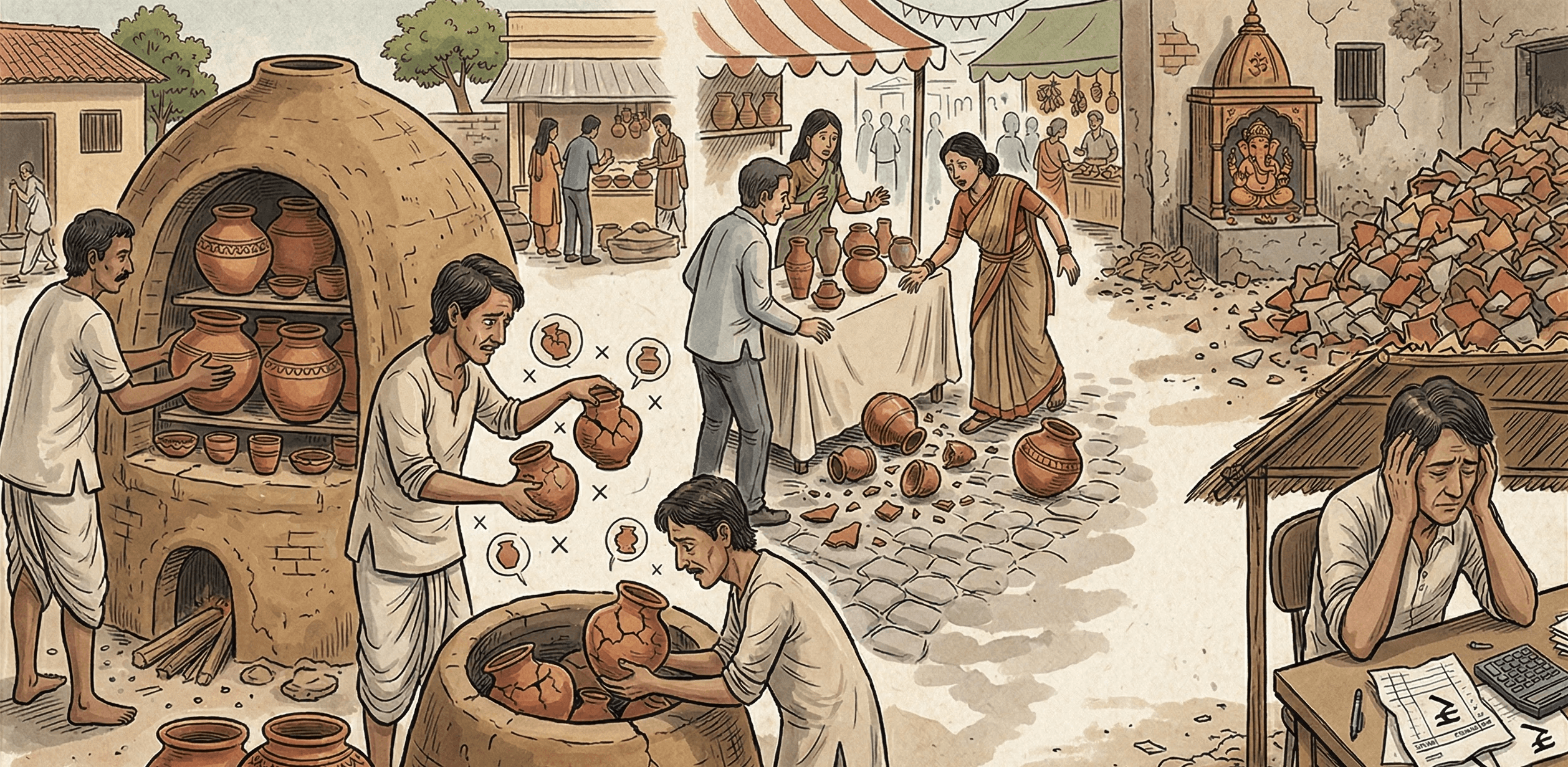
30%
Average material waste
90%
Not recycled
30%
Annual loss
02. Discovery & Research
To try to solve this problem I needed to get into the root of the process of pottery, understanding the workflow and connect with the potters to understand their emotional aspects as well as their pain points and touch points.
2.1 Contextual Inquiry & Field Visits
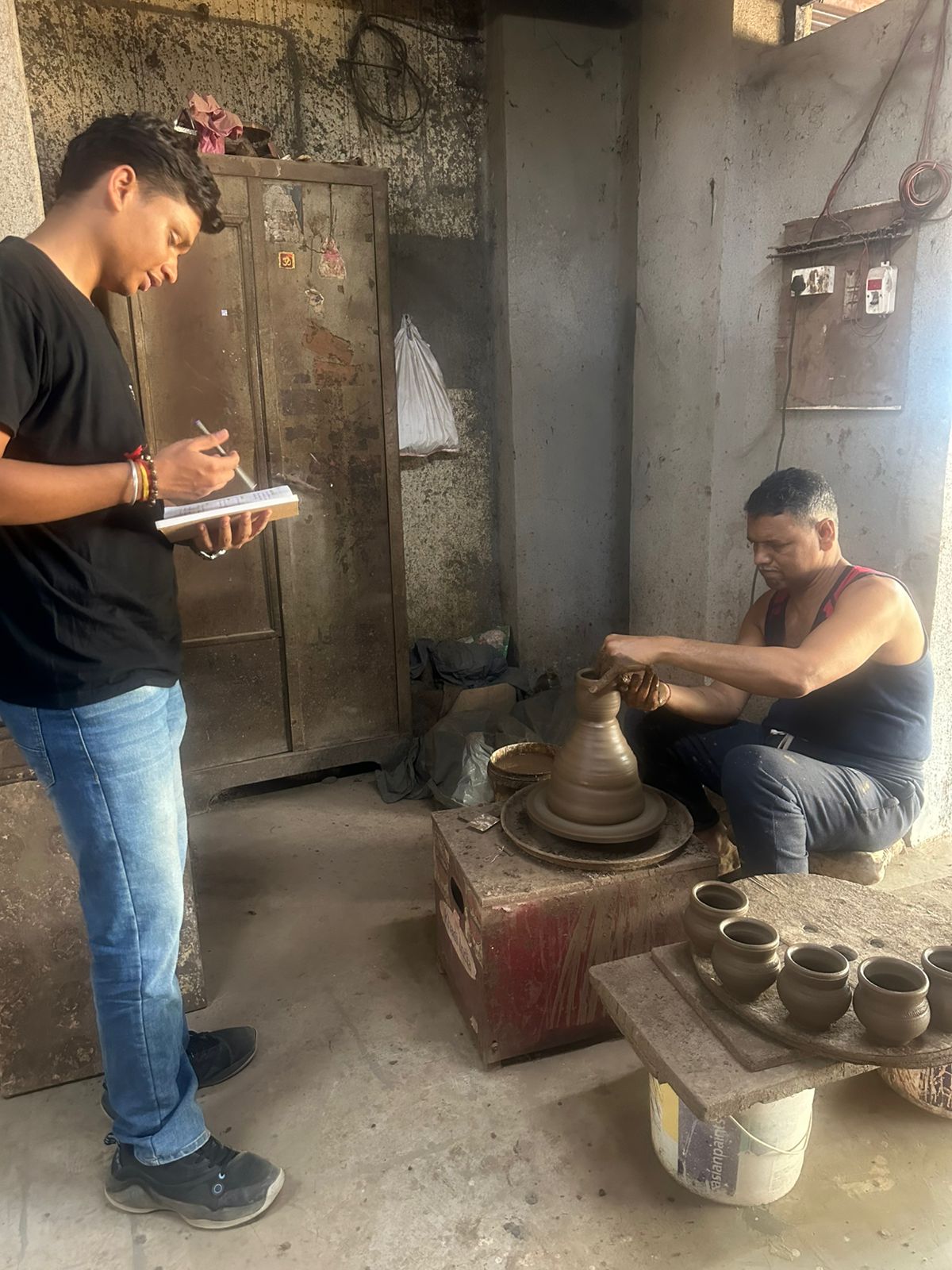
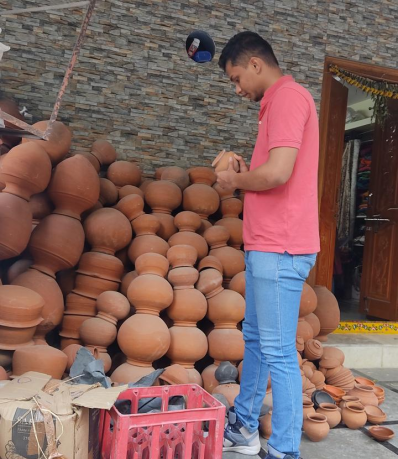
Obersving and Understanding the process:
Preparing and mixing the clay
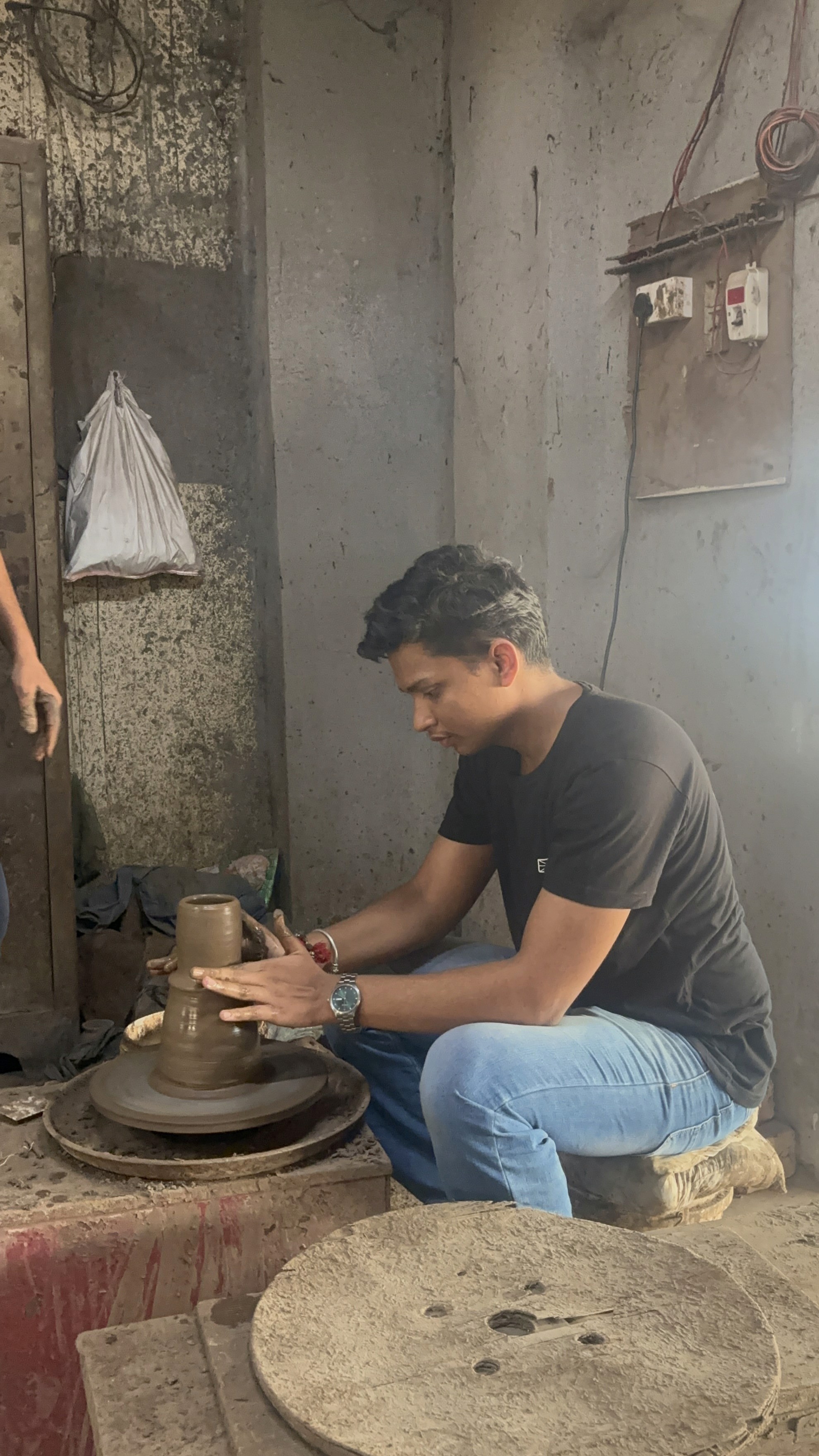
Shaping the clay on a potter's wheel
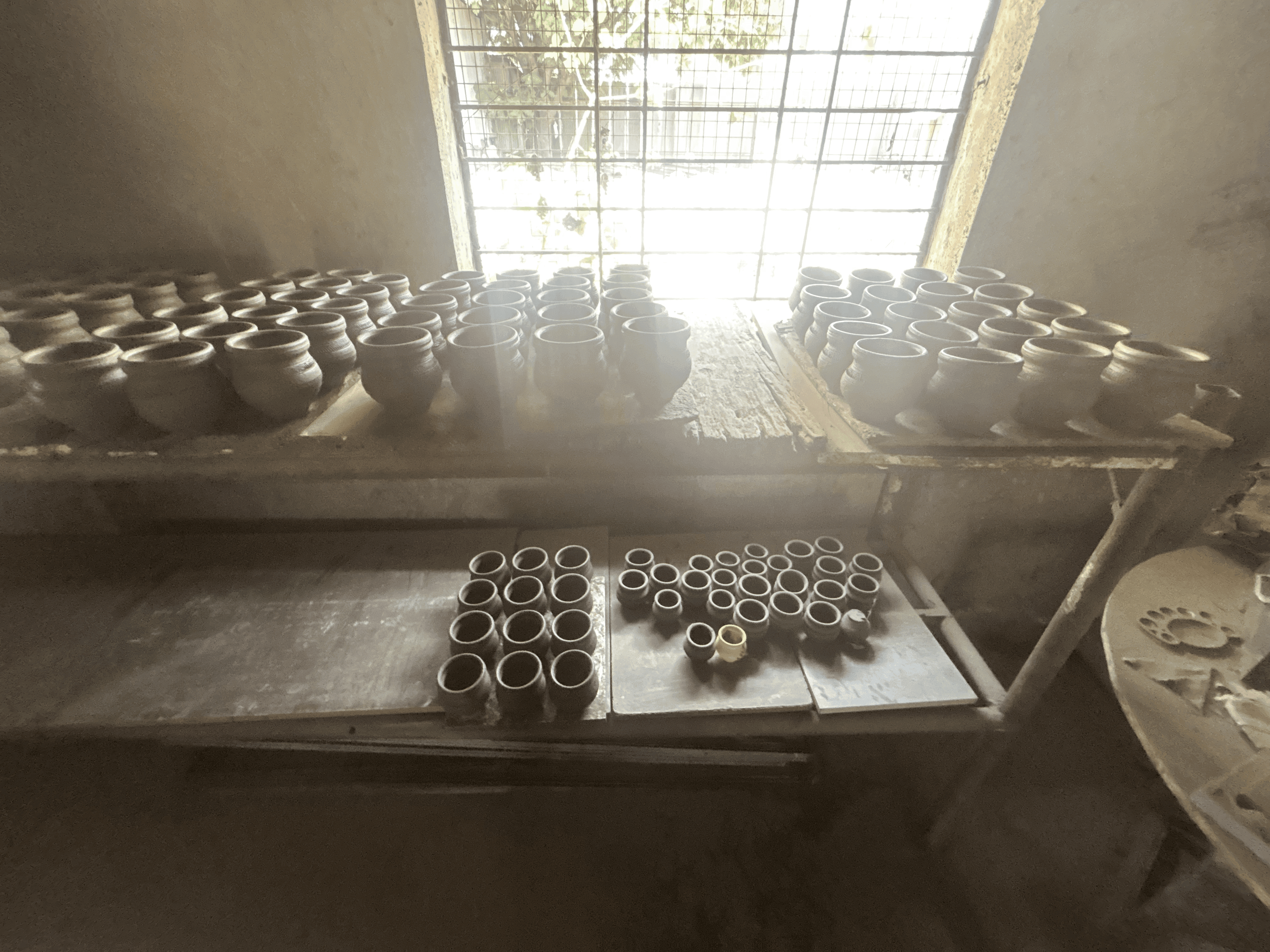
Placing the shaped pots out to dry
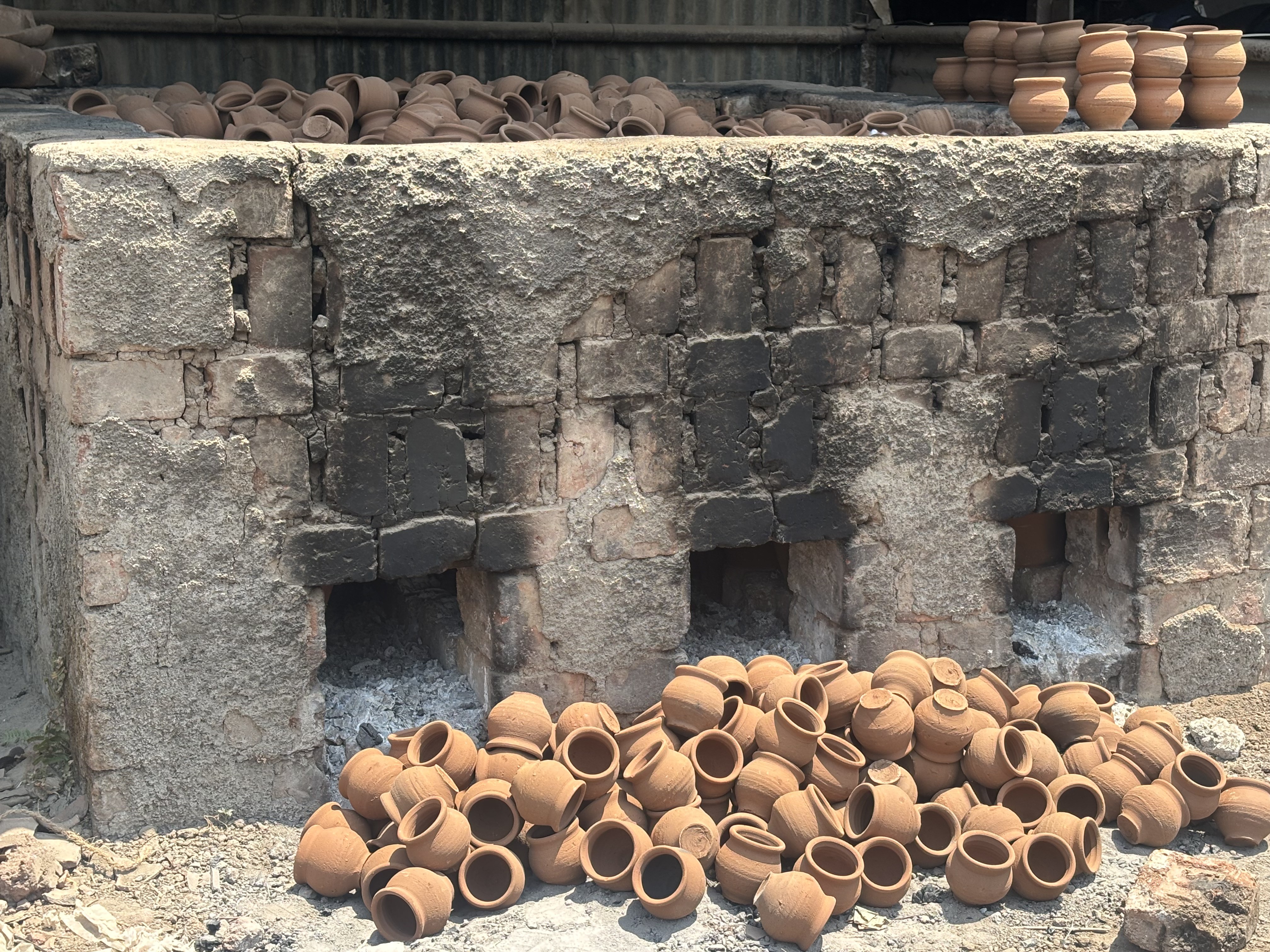
Firing the pots in a kiln
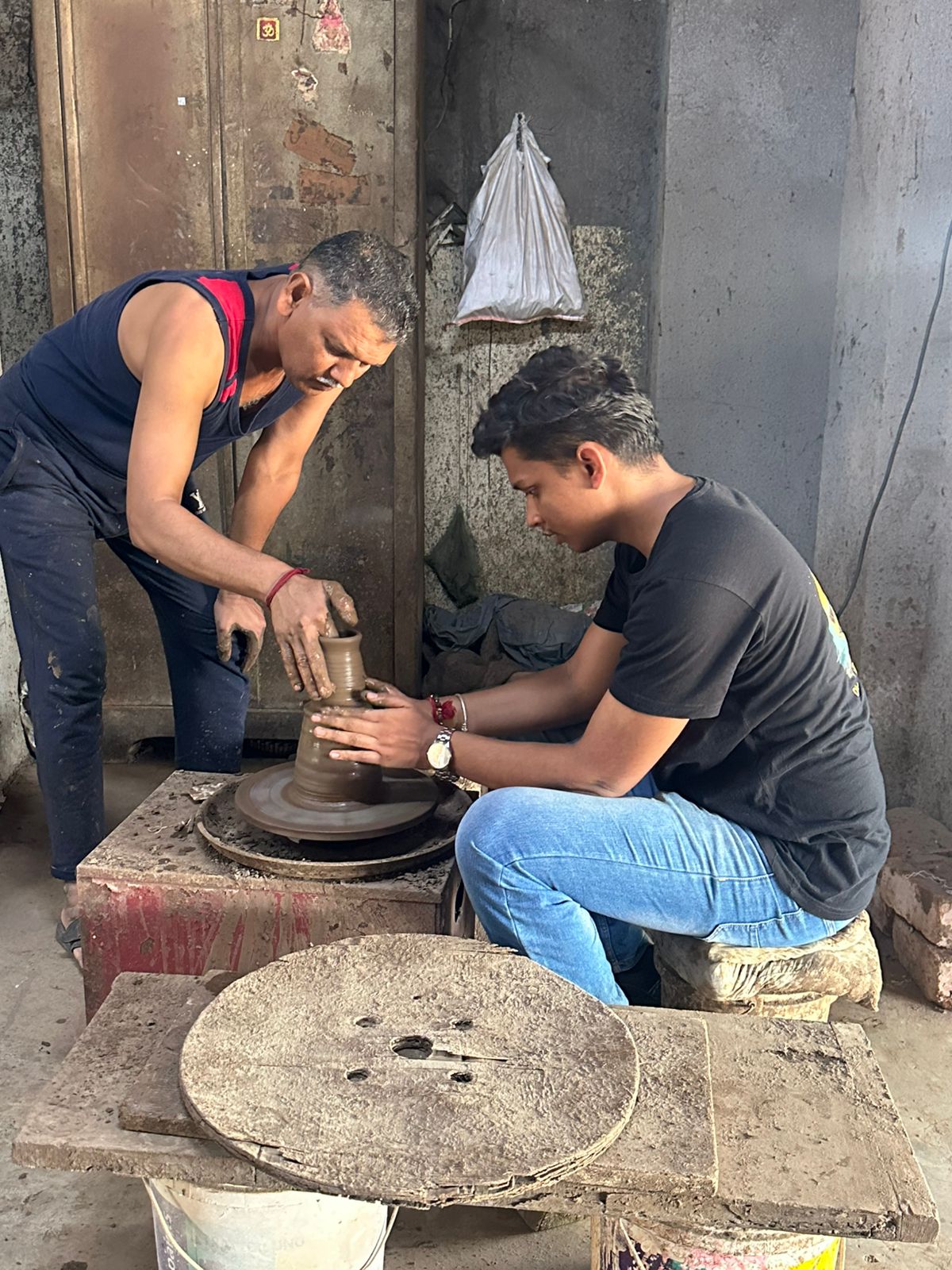
Getting the hands on experience of the process
Key Observations from the Field:
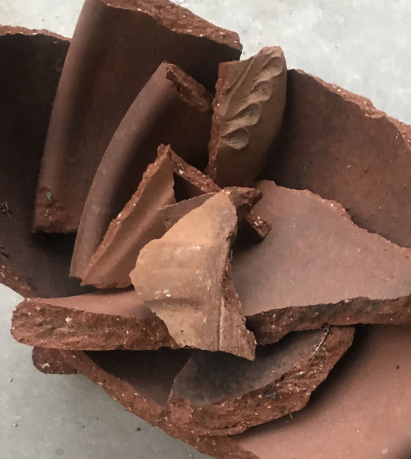
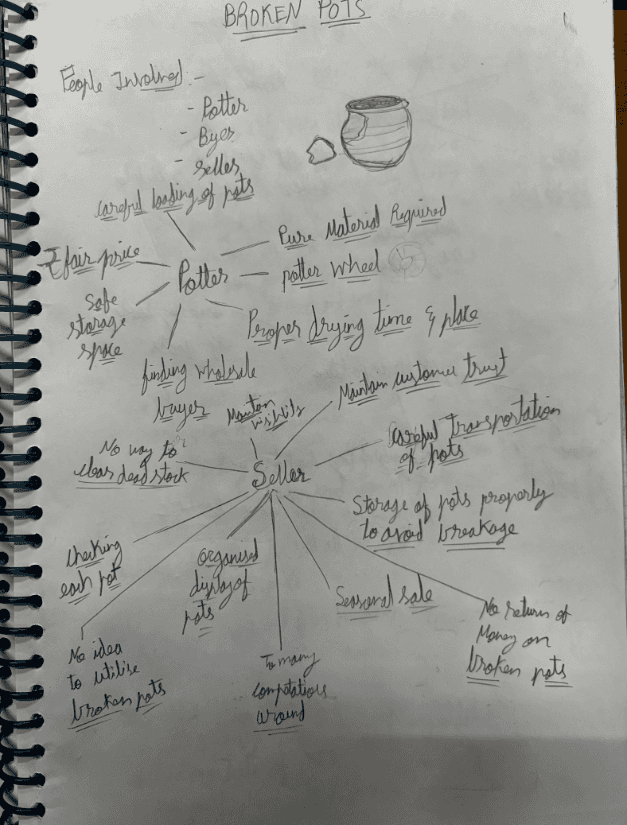
The Burden of Storage: Artisans lack proper disposal methods. Piles of sharp, broken shards are stored in cramped workspaces, creating safety hazards.
Lack of Sorting Mechanisms: Broken pieces are treated as uniform trash. There is no existing mental model for categorizing shards by color, weight, or curvature.
The Digital Divide: The artisans possess immense physical skill but generally have low digital literacy. Any technological solution introduced would need an incredibly low barrier to entry.
03. Qualitative Synthesis: The Voice of the Artisans
Through contextual interviews, I gathered firsthand accounts of the artisans' daily struggles:
Legacy & Identity
❝ I didn’t study much, but I managed to learn how to read and write in Telugu. ❞
❝ Selling pots for over 25 years to continue our family legacy. ❞
Emotional & Financial Burnout
❝ I feel sad when people bargain below a profitable price and still leave unhappy. ❞
❝ The most frustrating part is seeing perfectly good work destroyed, the investment lost, and no way to recover it.❞
By synthesizing the field research, I mapped out the primary friction points for both sides of our proposed marketplace and created persona:
04. Ideation & Strategy
With a clear understanding of the users, I framed the core challenge.
How Might We: How might we create a platform that systematically repurposes broken pottery to recover financial losses for artisans, while providing eco-conscious buyers with sustainable crafting materials?
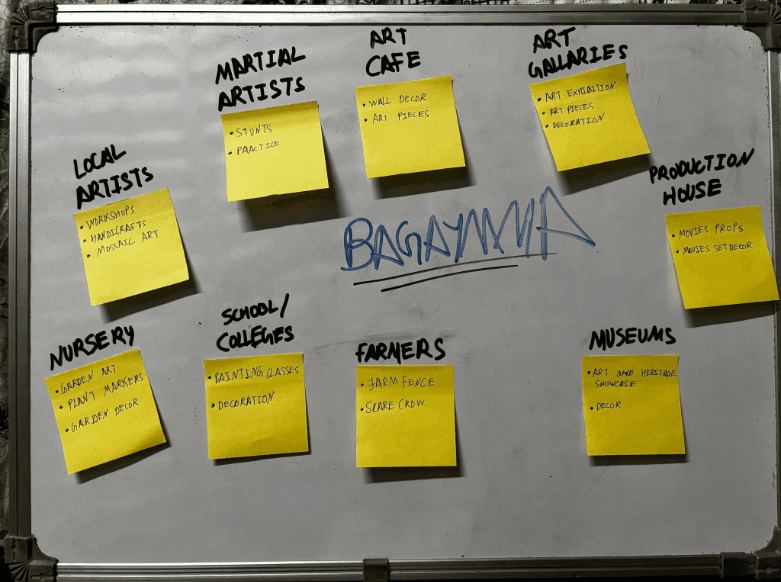
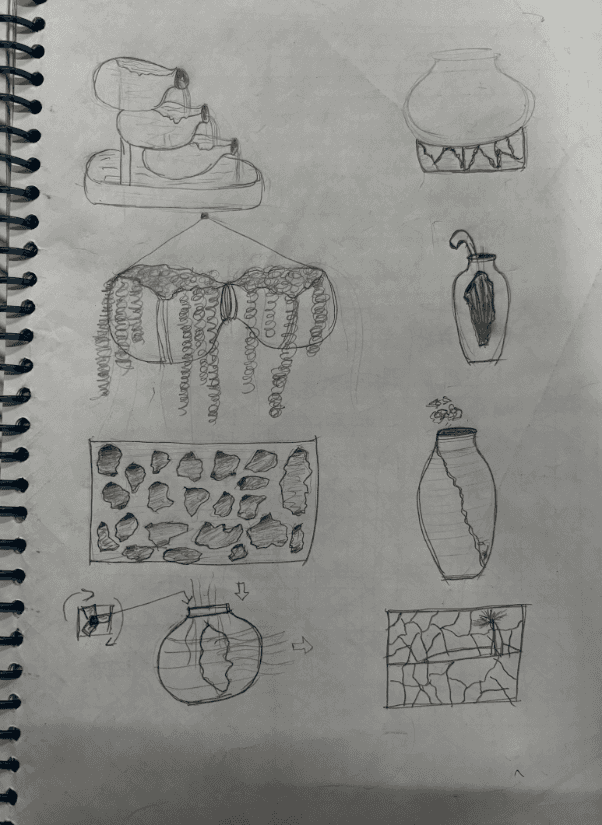
Exploring Solutions
I brainstormed four potential avenues to address the problem:
Social Media
✔️ Start social media shop page
✔️ Marketing broken pots usage
✔️ Collaborate with artists & cafes
UpCycle Pottery Marketplace
✔️ Broken Pot Pieces
✔️ Artistic transformations
✔️ DIY Project Kits

Appeal to the Government
✔️ Raise a campaign online
✔️ Appeal for insurance for pots
✔️ Join and make a community
Word of Mouth
✔️Local marketing strategy
✔️ Target local artisans
✔️ Customer referrals
The Chosen Direction: I proceeded with the UpCycle Pottery Marketplace, as it provided the most scalable, direct financial impact for the artisans while solving the sourcing problem for buyers.
05. The Solution: Matkarma
A digital marketplace for broken pot pieces, DIY craft kits, and finished artifacts,
MatKarma
Three Marketplace Categories:
DIY Project Kits
Step-by-step guides for crafts using broken pots
Shows how many and what type of shards needed
Add all required items to cart in one click
Broken Pot Pieces
Raw shards uploaded by artisans
Sold by weight, color, or size
Art Pieces & Artifacts
Mosaics, sculptures, decor made from broken pottery
Showcase artisan creativity and sustainability
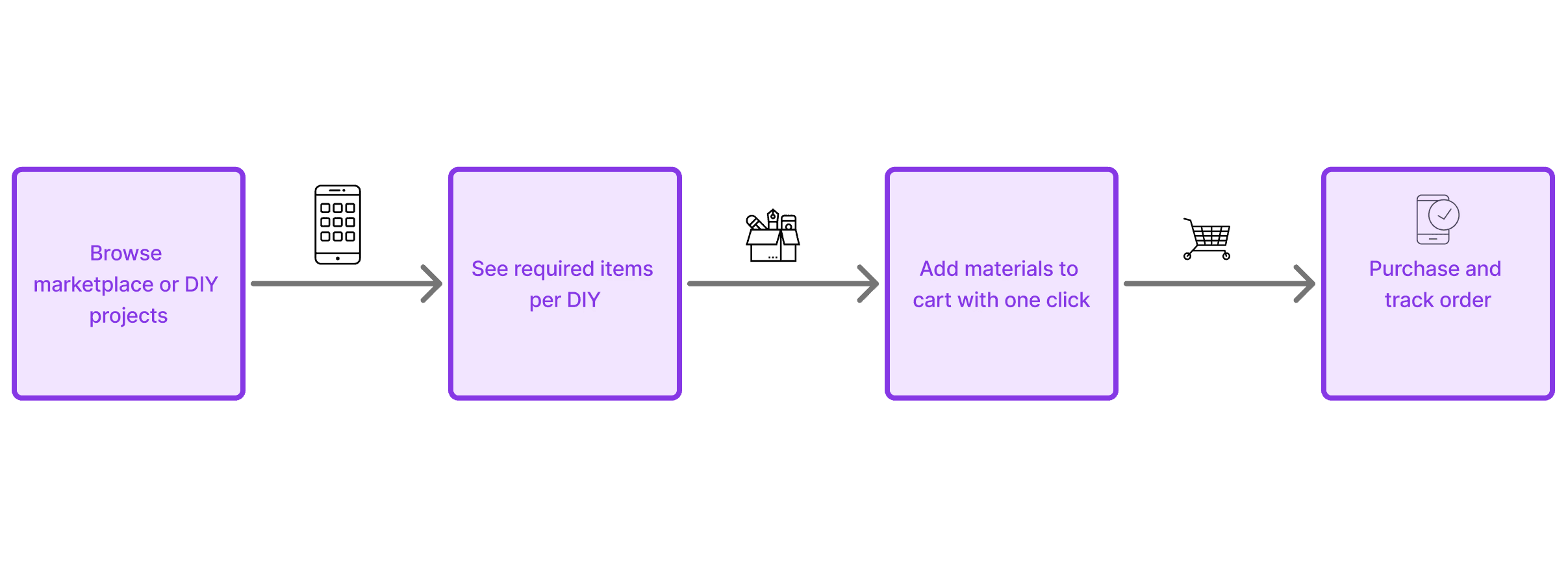
06. User Flow
Designing a two-sided marketplace required mapping out distinct, frictionless journeys for both the artisan uploading inventory and the buyer making a purchase.
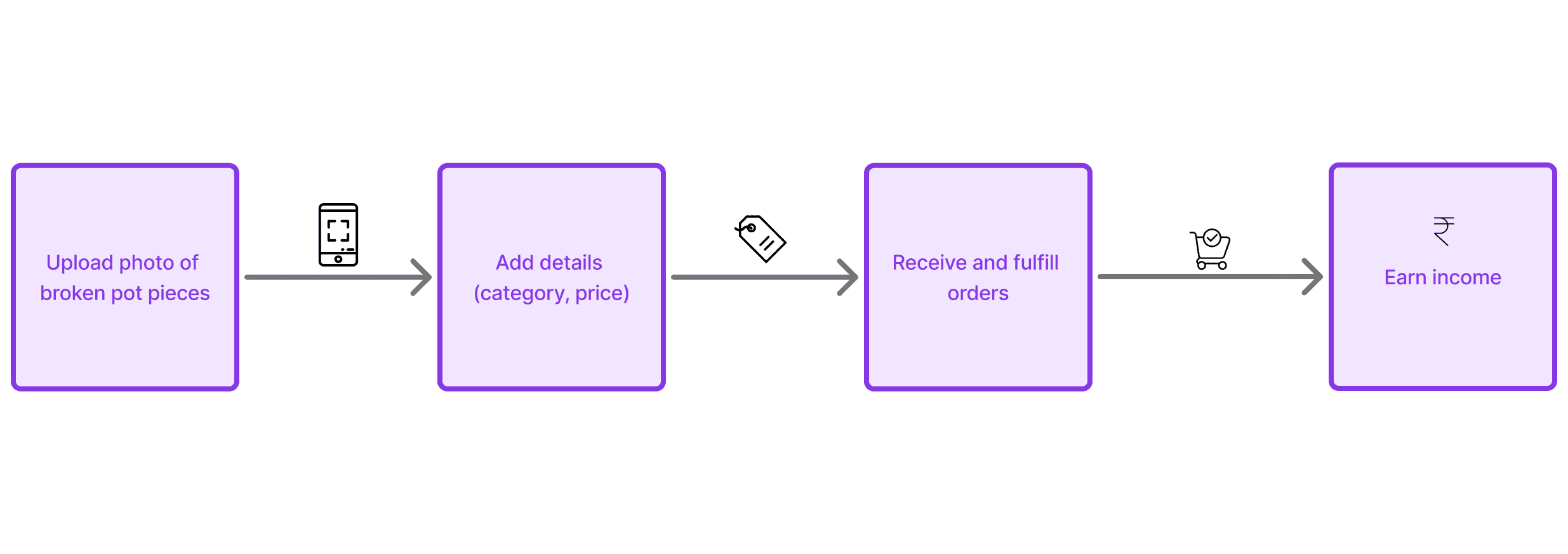
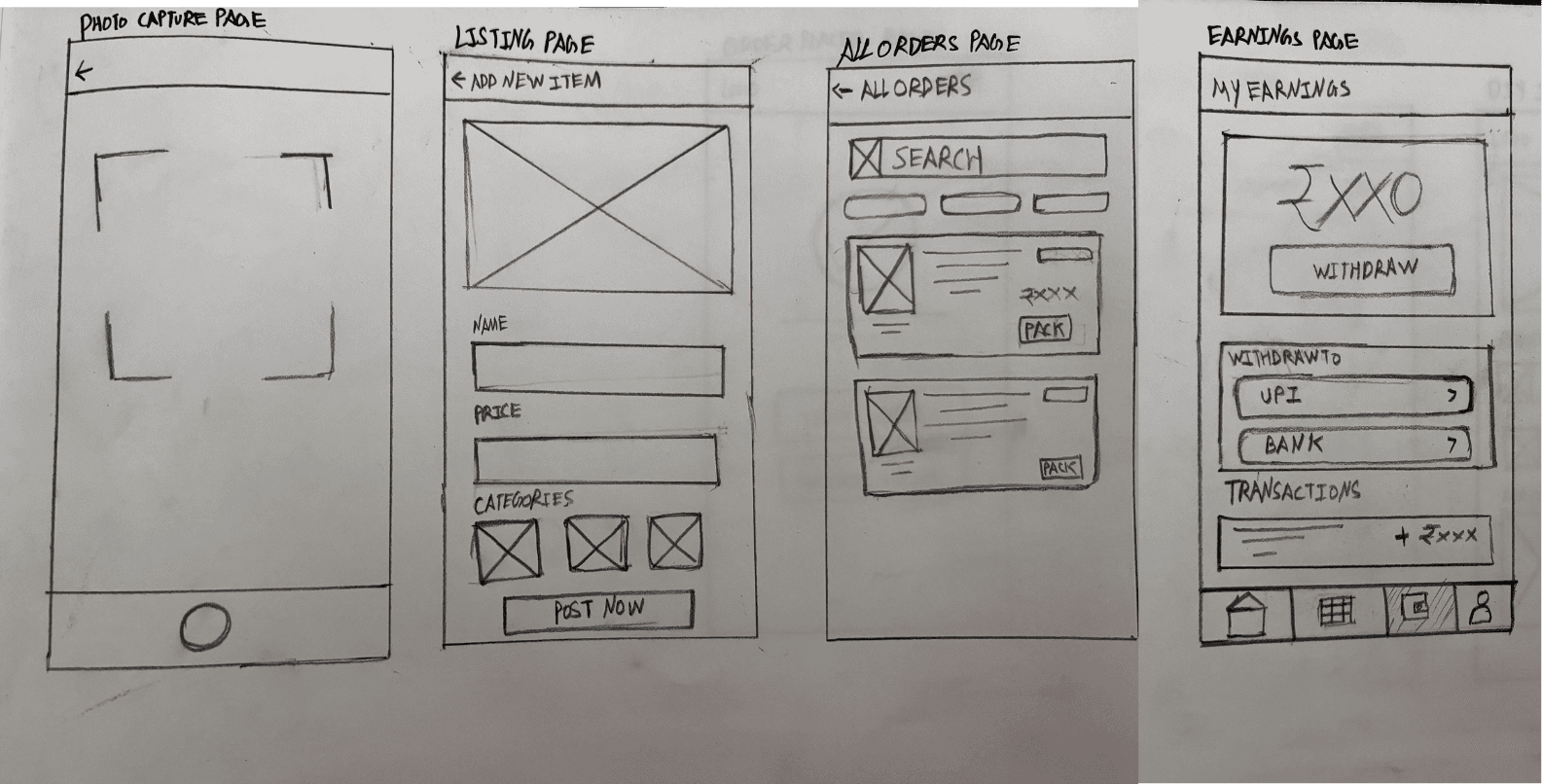
The Seller Flow
The priority was making inventory upload as simple as possible for users with lower digital literacy, focusing on visual categorizations (color, size, weight).
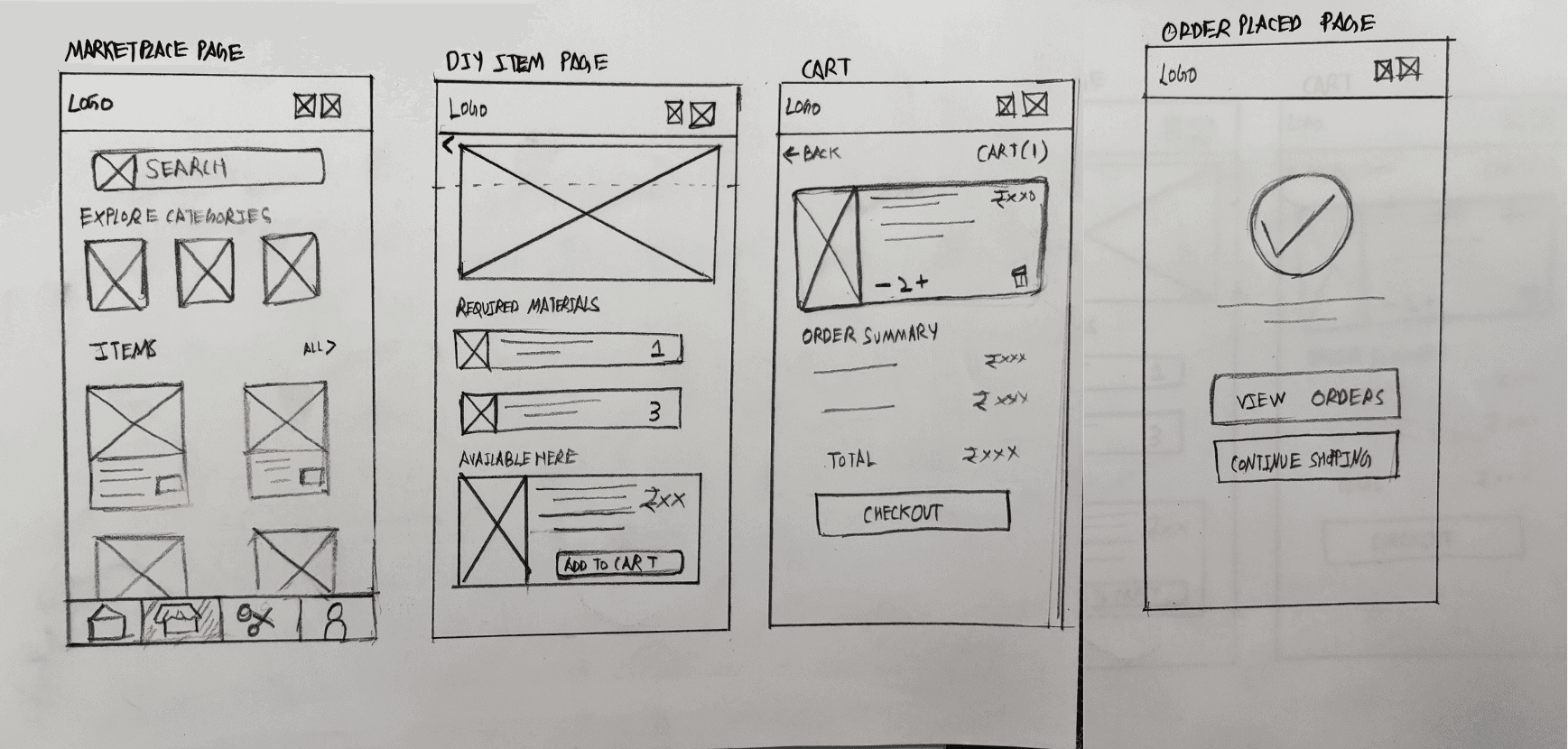
The Buyer Flow
The priority was a seamless e-commerce experience, specifically streamlining the purchase of multi-component DIY kits.
07. Wireframes & Visual Design
Before committing to high-fidelity visuals, I rapidly iterated on the layout and core interactions using wireframes to ensure the structural logic held up.
STYLE GUIDE
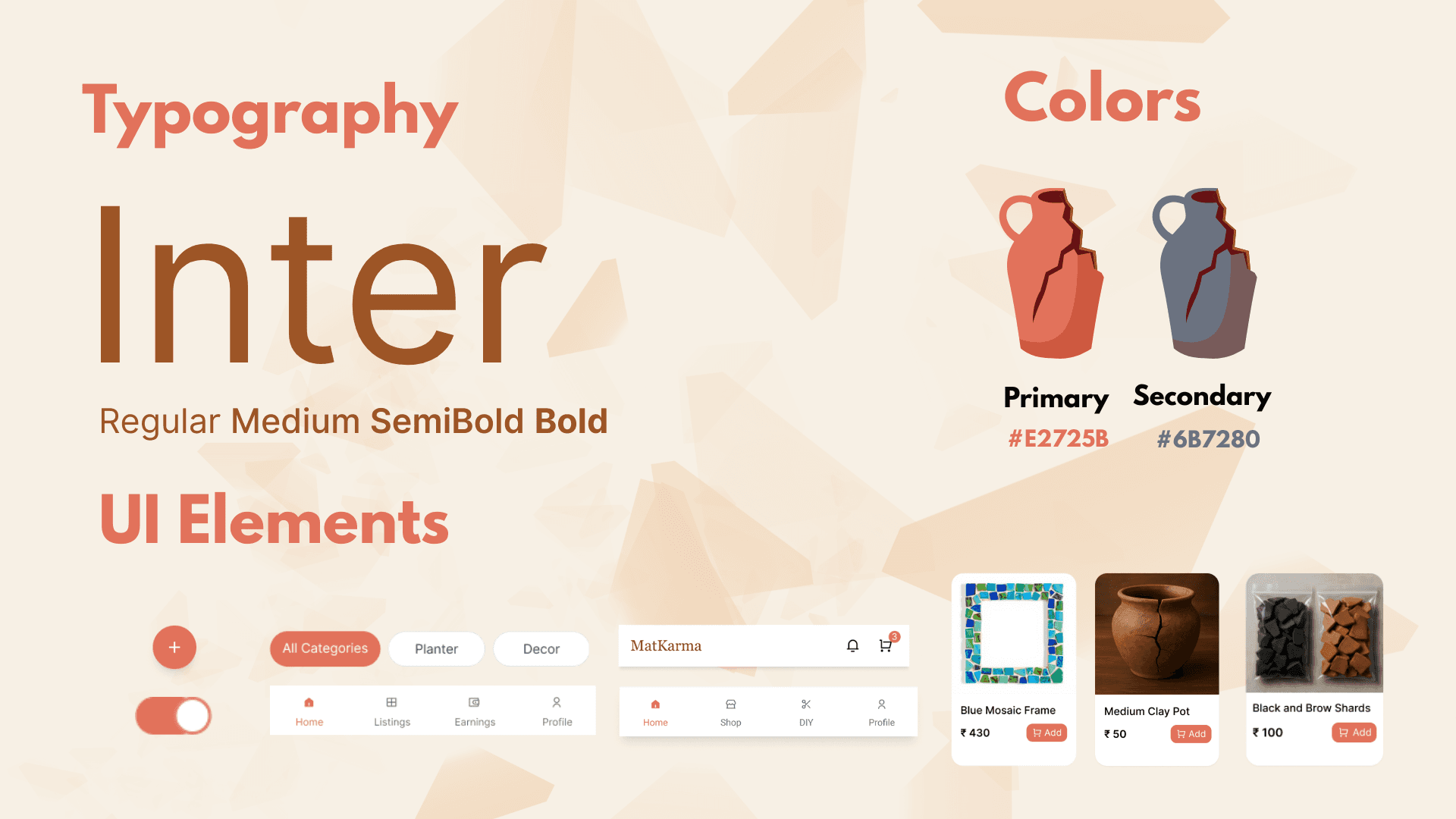
The visual direction needed to feel earthy, grounded, and respectful of the craft, while maintaining the crisp usability of a modern e-commerce platform.
High-Fidelity Mockups

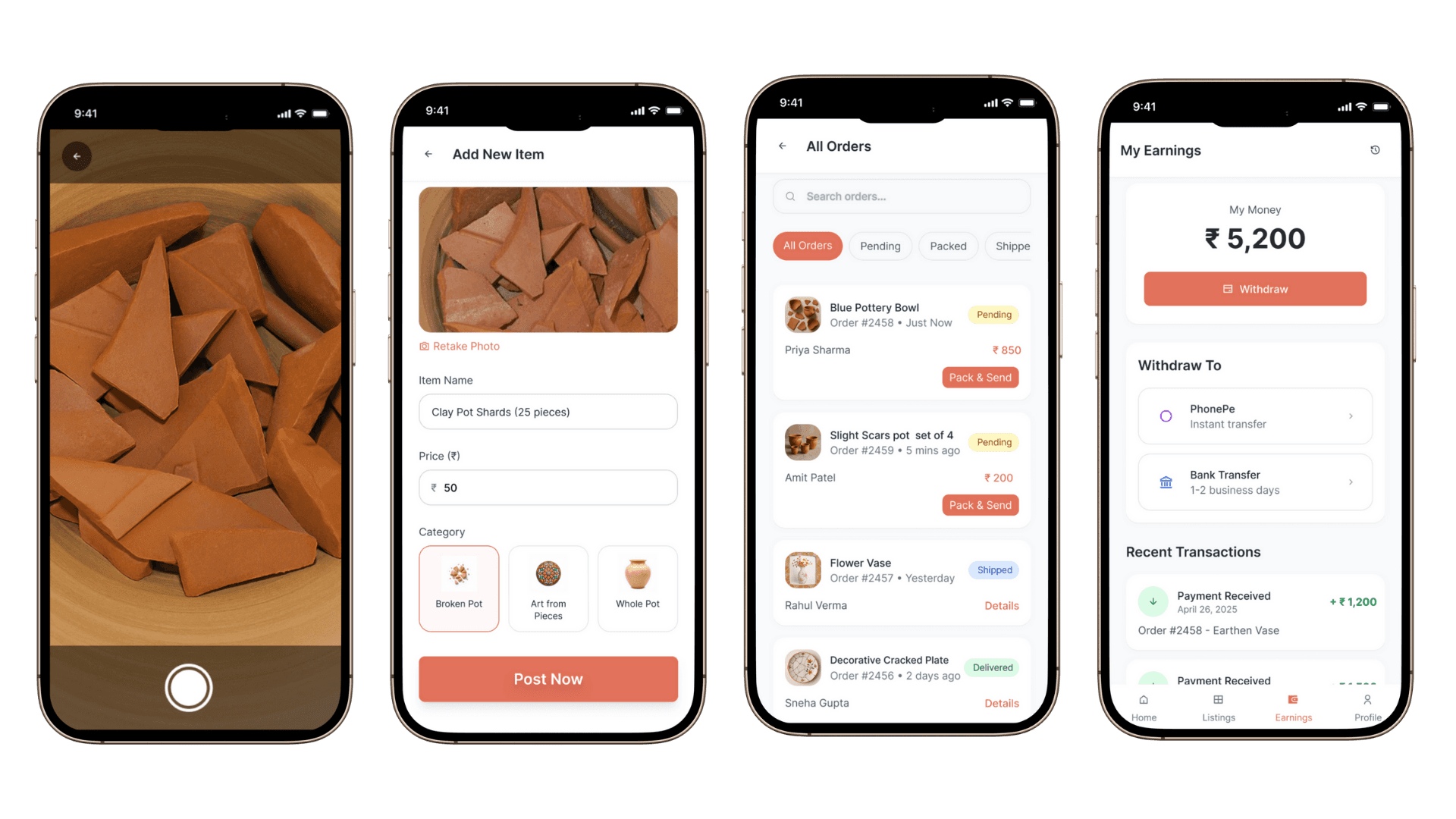
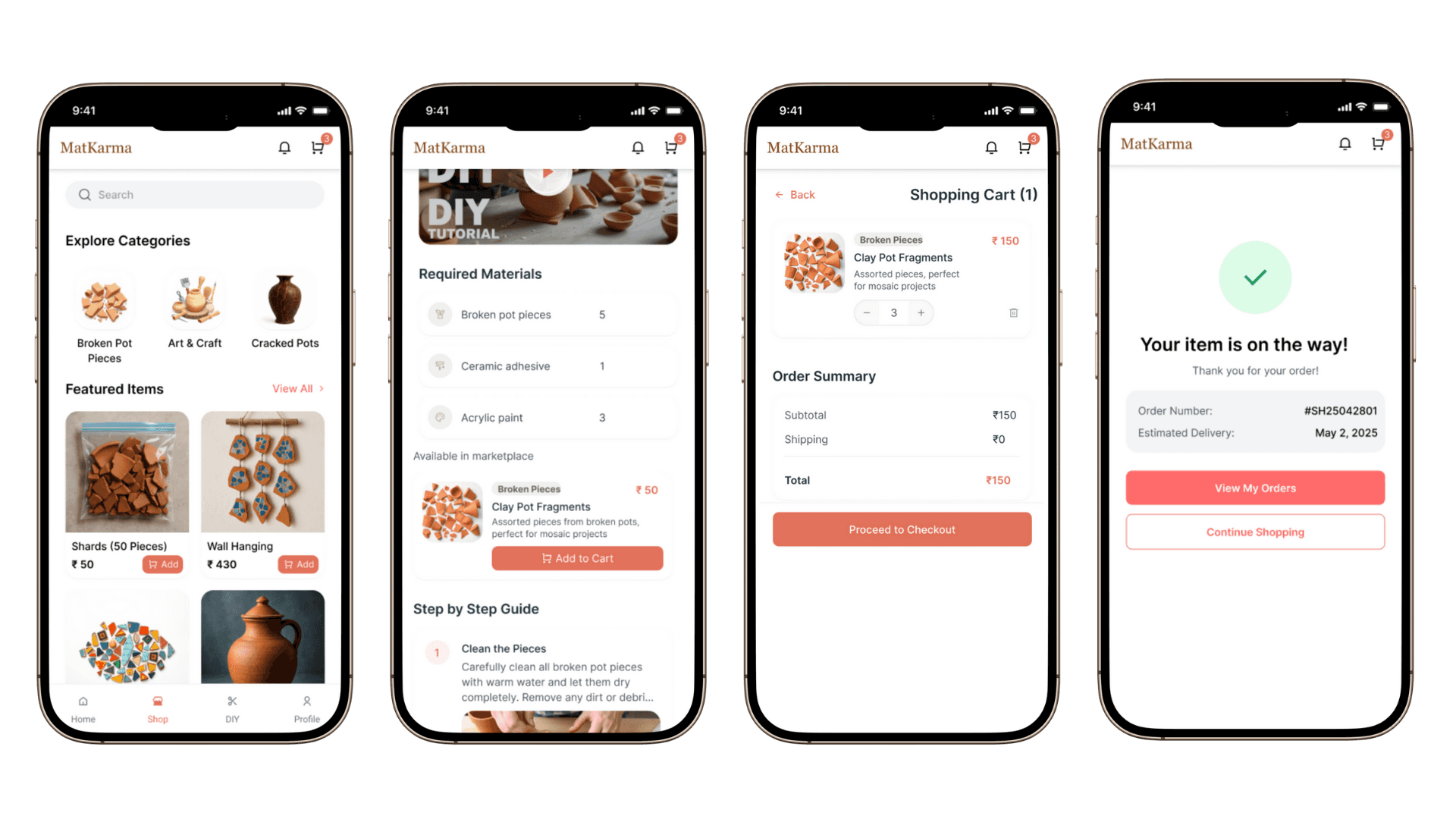
08. Interactive Prototyping
To fully validate the dual-sided nature of the platform, I built out interactive prototypes for both the buyer and seller journeys.
Seller Side Prototype
Buyer Side Prototype
09. What Next?
Usability Testing and iterations
Currently the app targets semiliterate users further implementation could be adding more accessibility features so that even low literate potters and pot sellers could access and use this without any issues.
10. The Big Picture (Future Scope)
Matkarma is designed as a foundational step toward a larger systemic change. Looking ahead, the impact of this platform can be amplified through strategic initiatives:
Government tie up
Partner Matkarma with government to scale and reach more and more potters, pot sellers and artisans
Tax benefits and incentives
Introduce tax benefits and incentives for buyers purchasing up cycled products, encouraging people to join Matkarma

Technological Assistance
leverage government's digital literacy programs to make artisans, potters and pot sellers comfortable with technology
11. Conclusion & Takeaways
Designing Matkarma was a profound exercise in balancing empathy with functional system design. It highlighted that true UX isn't just about making things look good, it's about creating accessible bridges for people whose livelihoods depend on it. By focusing on low digital literacy and the emotional weight of lost inventory, Matkarma transforms a narrative of waste into one of opportunity and renewed value.