Enter password to view case study
Svaroots: Co-Creating the Modern Indian Sneaker
Type
End-to-End Product Design
My role
(Strategy, UI/UX, Front-End)
Team
5
Duration
6 Weeks
01. The Market Opportunity
The Market Gap
Before pushing any pixels, I analyzed the mass-premium Indian footwear market to find actual business gaps. I discovered that major brands treat young buyers as passive consumers, completely missing out on the psychological value of co-creation. I anchored my product strategy on three major insights:
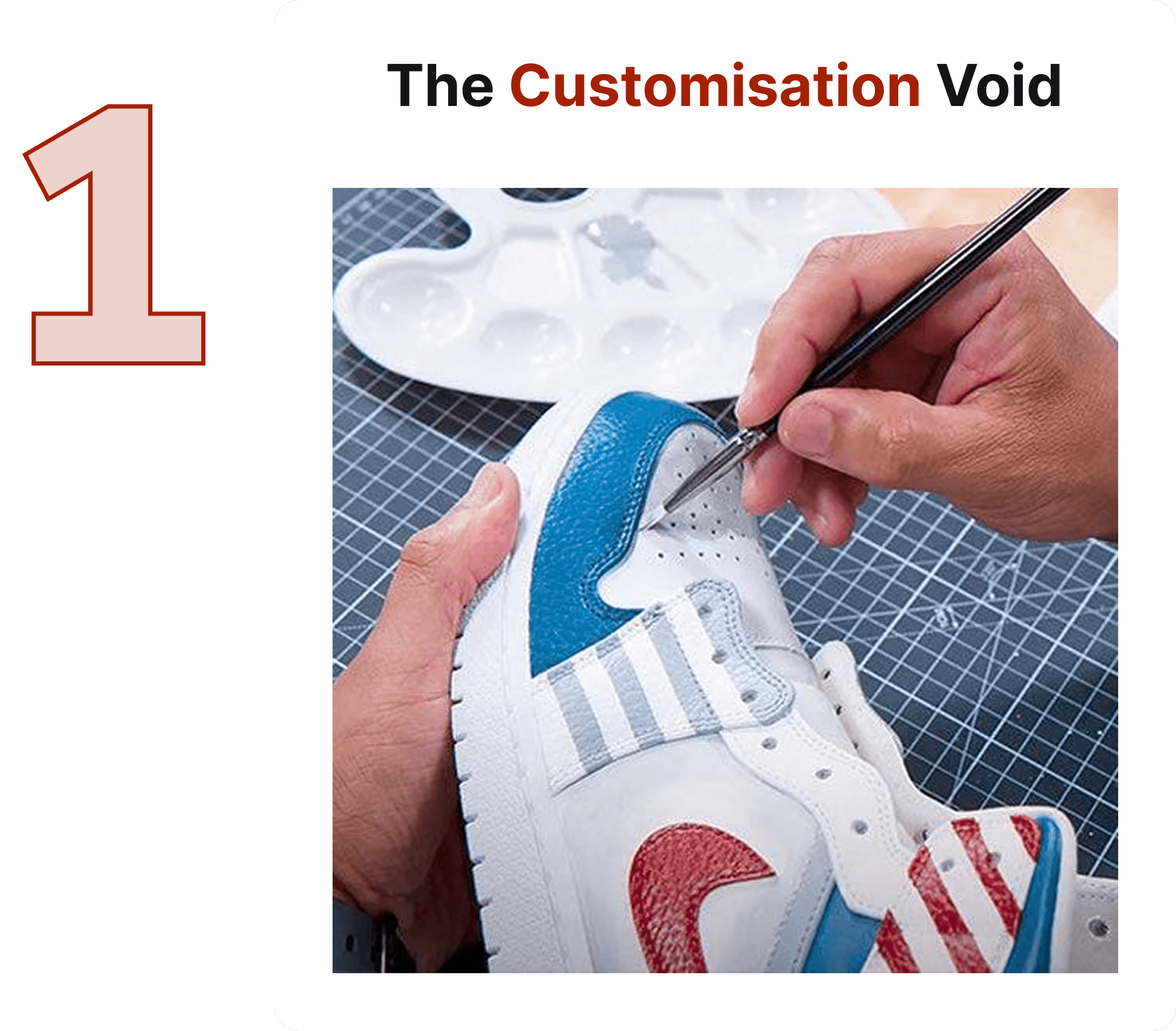

While 52.5% of Gen Z explicitly states that fashion brands can better cater to them by offering customizable products, the current market treats them as passive consumers of "limited drops" rather than active participants. Furthermore, 60% of Gen Z defines DIY fashion as customizing clothing themselves, actively seeking textile enhancements.
Research proves that when consumers are involved in customizing a product, their willingness to pay significantly increases. By allowing simple, non-functional choices, a brand can command a premium price without breaking the rigid manufacturing supply chain.
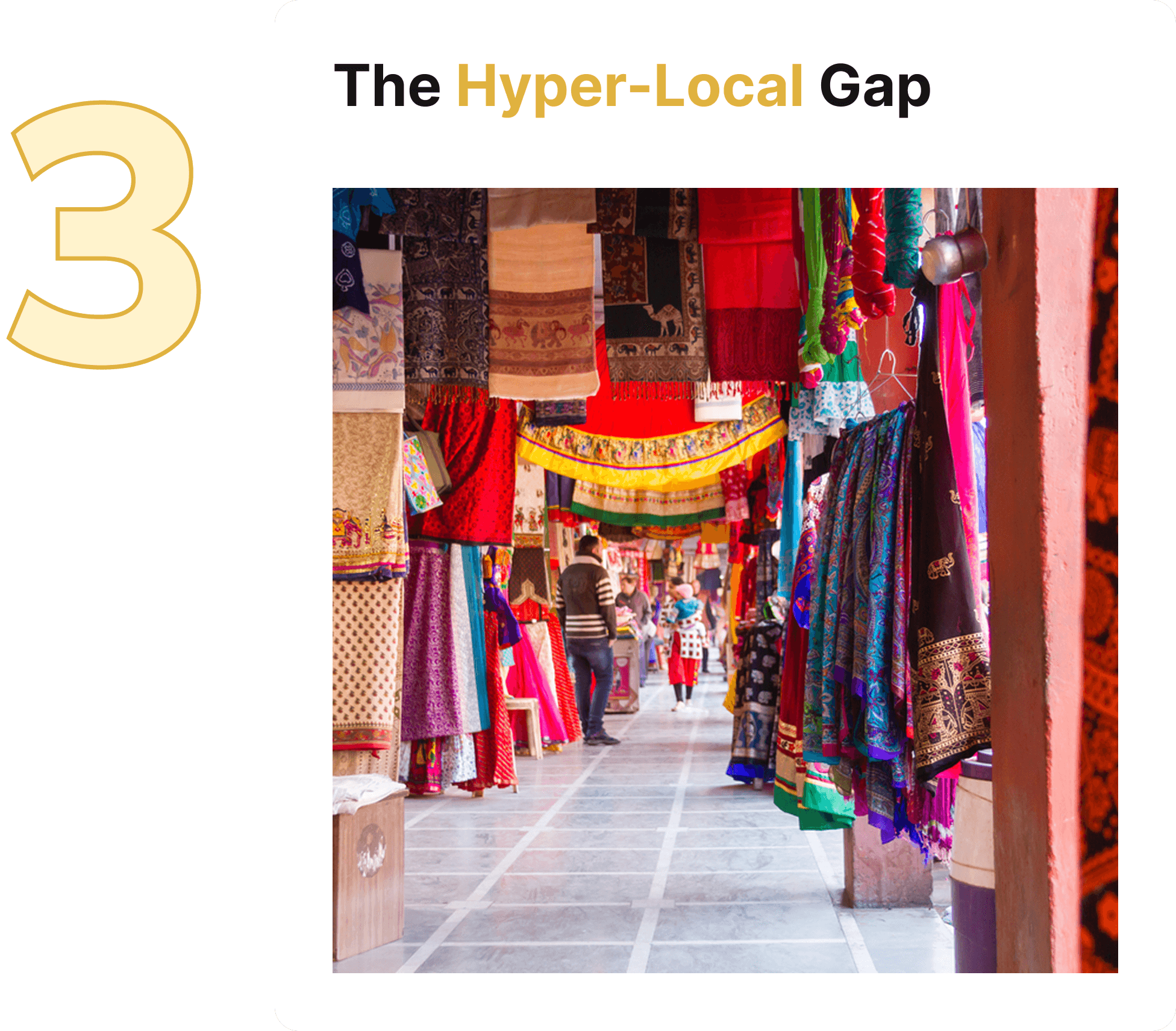
The industry lacks a dedicated sizing system for Indian foot anatomy, relying on Western molds. Additionally, brands curate inventory regionally but fail at product-level modularity. There was no system allowing a user to easily swap in authentic Indian textiles like a Kalamkari weave or an Ikat patch.
View Market Research & Strategy (PDF)
02. The Product & The Experience
Derived from "Sva" (Self) and "Roots" (Origin), Svaroots is a digital platform and modular sneaker brand designed for active creation.
The Product:
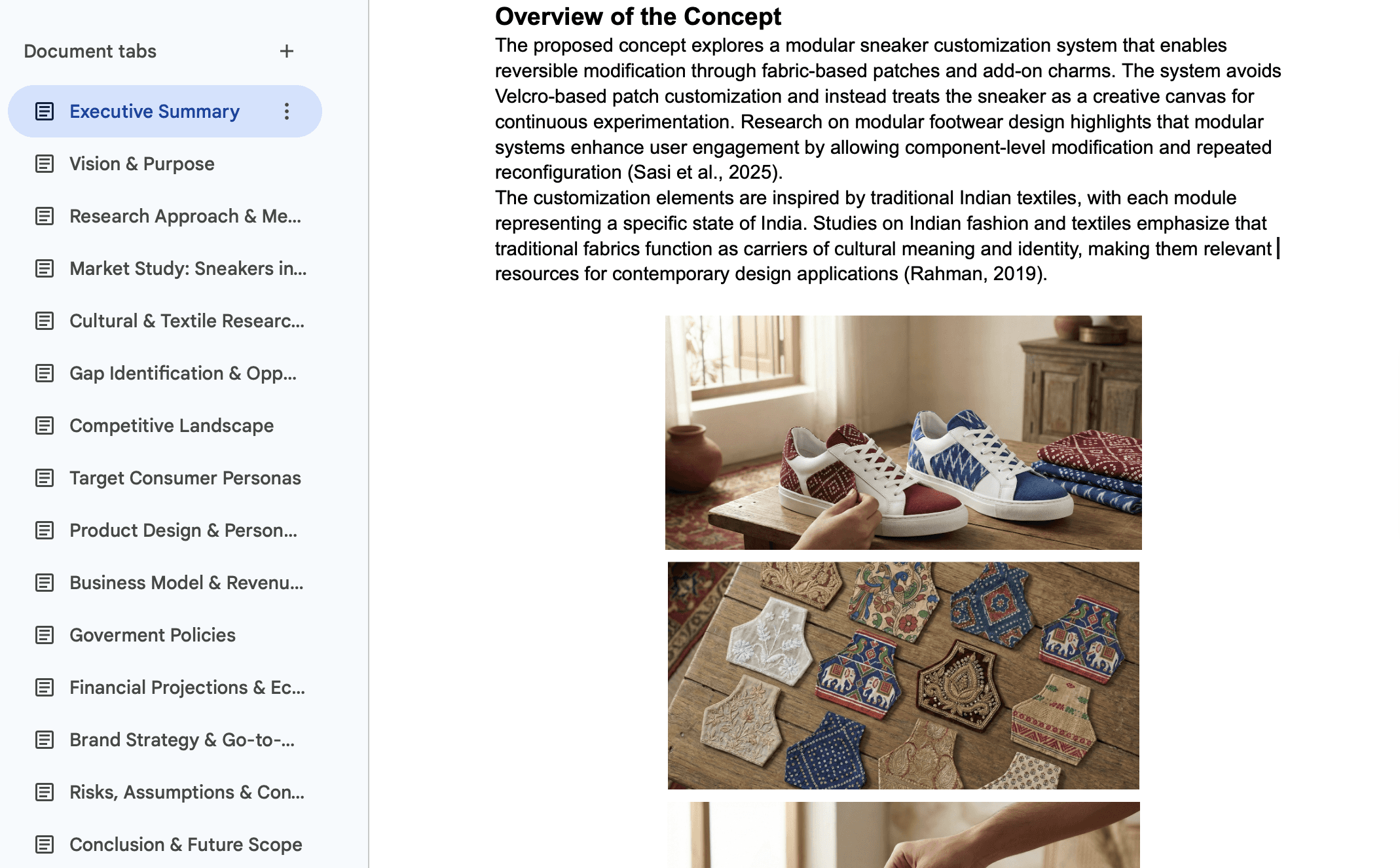
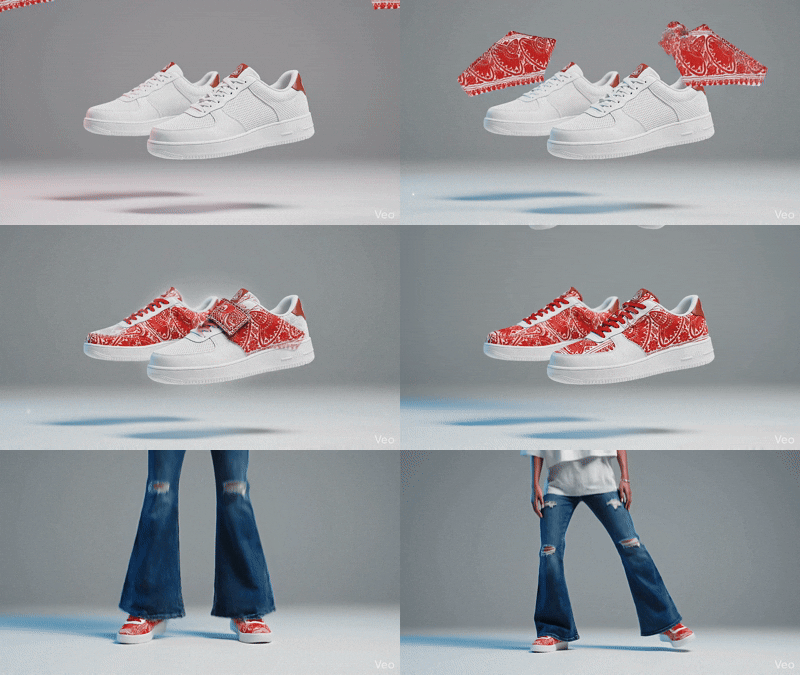
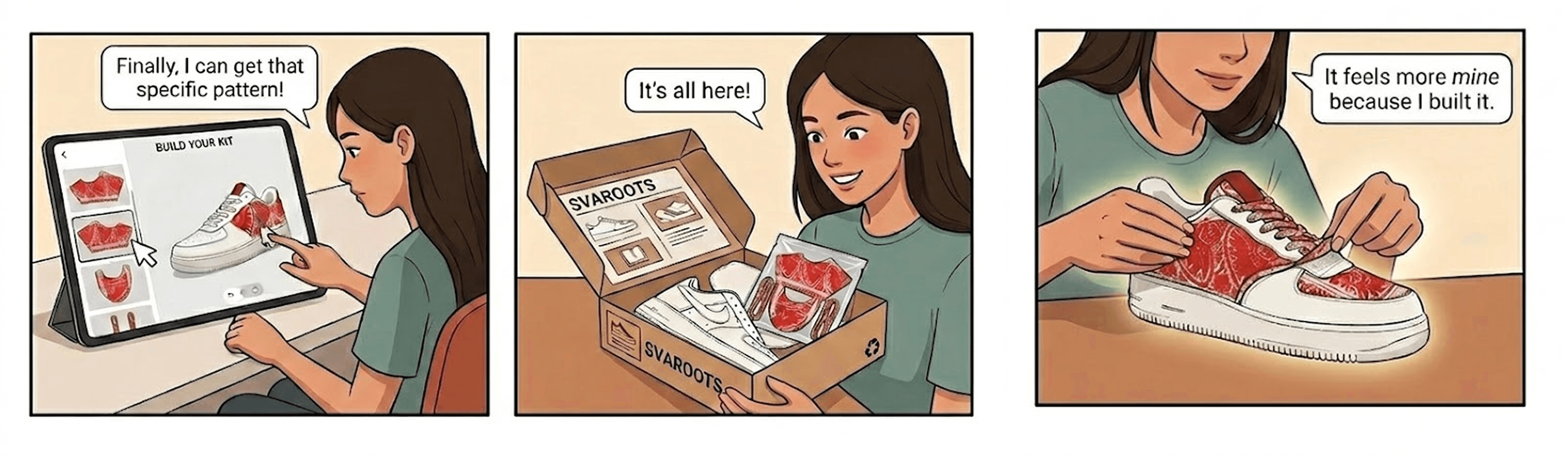
The core product is a base sneaker engineered specifically for Indian foot anatomy. The upper features designated modular zones (like the side panel or heel tab). Instead of buying a static shoe, the user buys a canvas and a set of authentic, hyper-local fabric patches that physically attach to the shoe
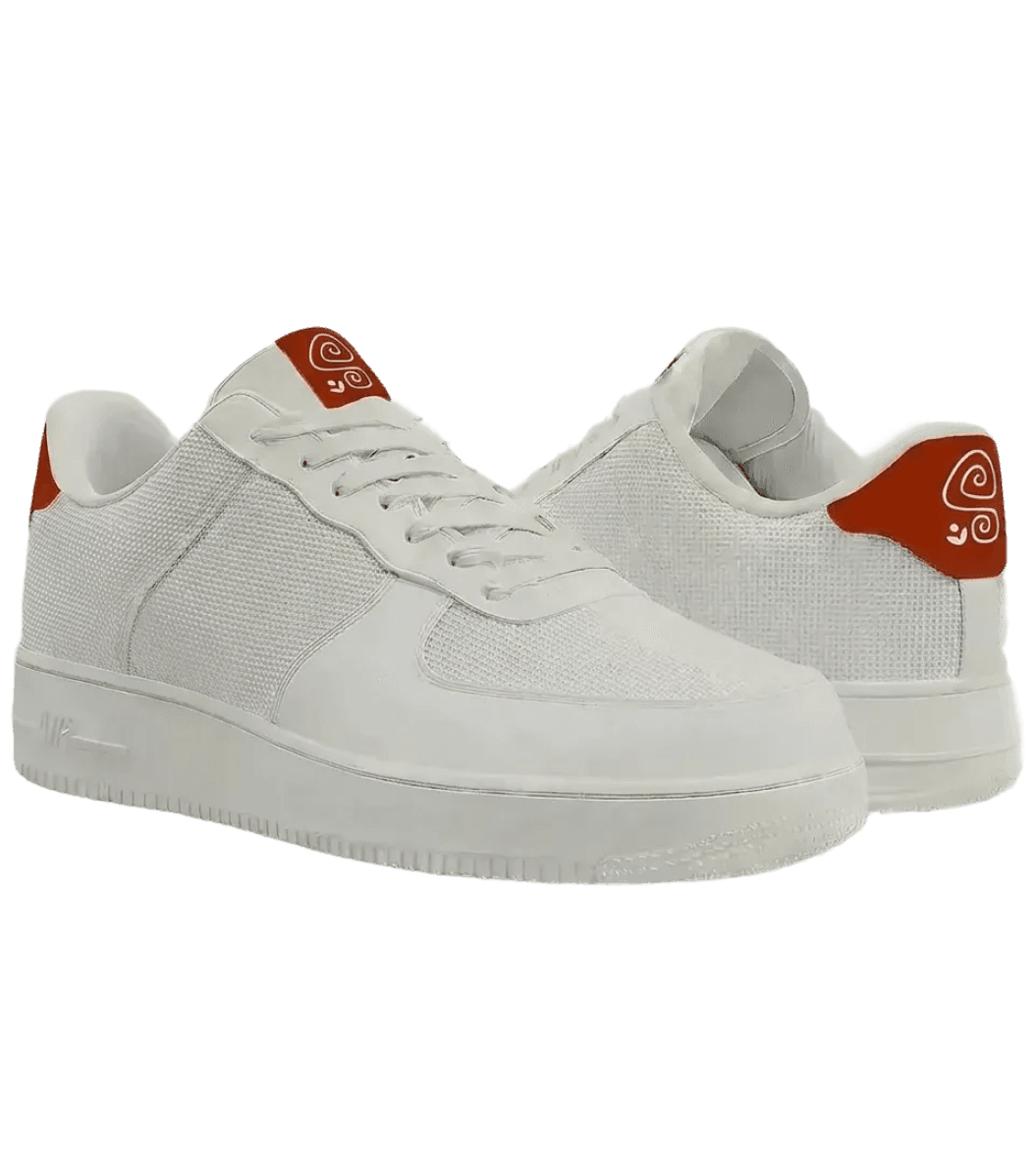
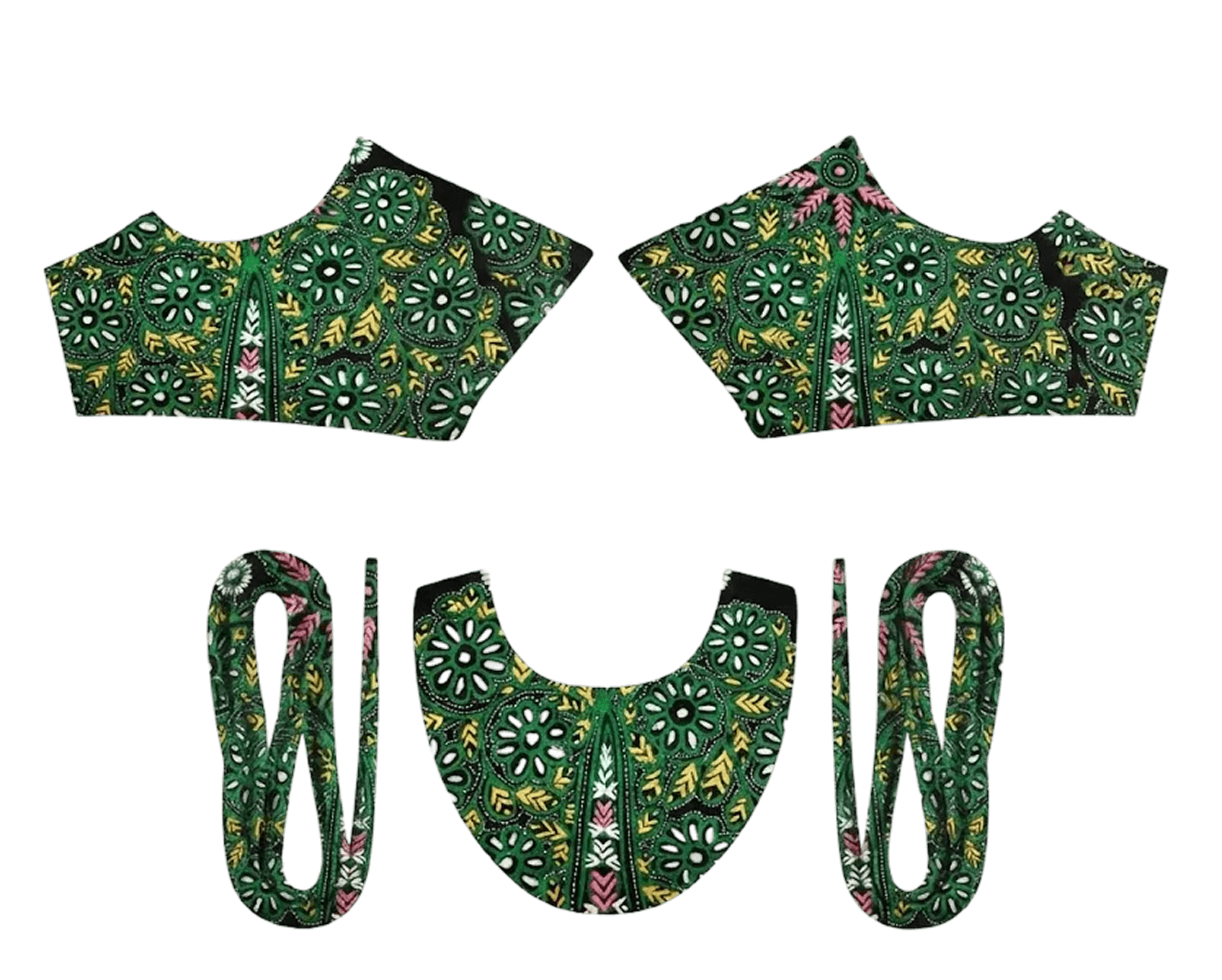
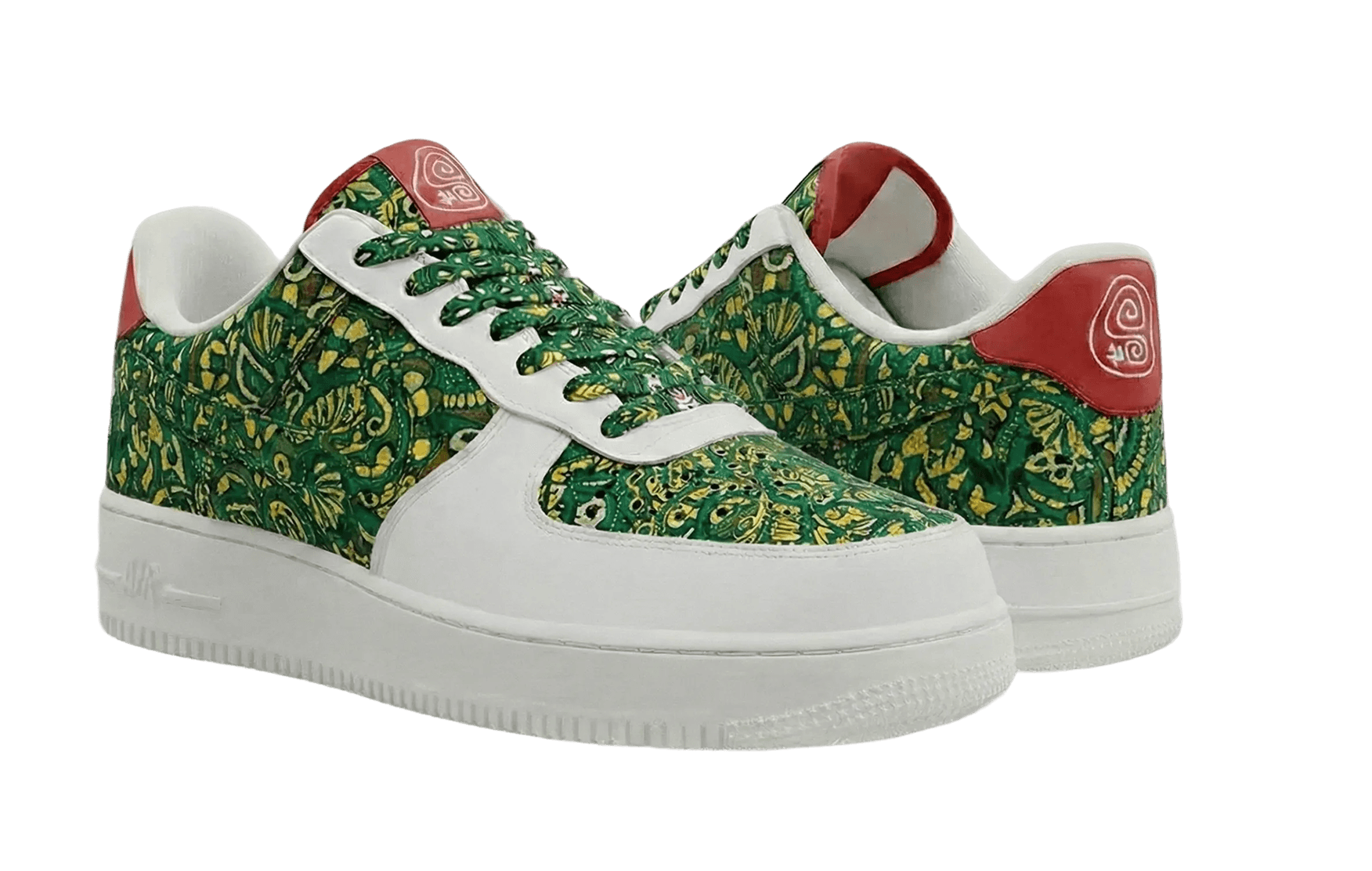
The Experience
The user journey bridges the digital and physical worlds. The user goes online, visually builds their shoe using a digital customizer, and receives a physical kit to assemble at home. This satisfies the user's craving for DIY fashion while creating a deep, psychological "IKEA effect" bond with the product.
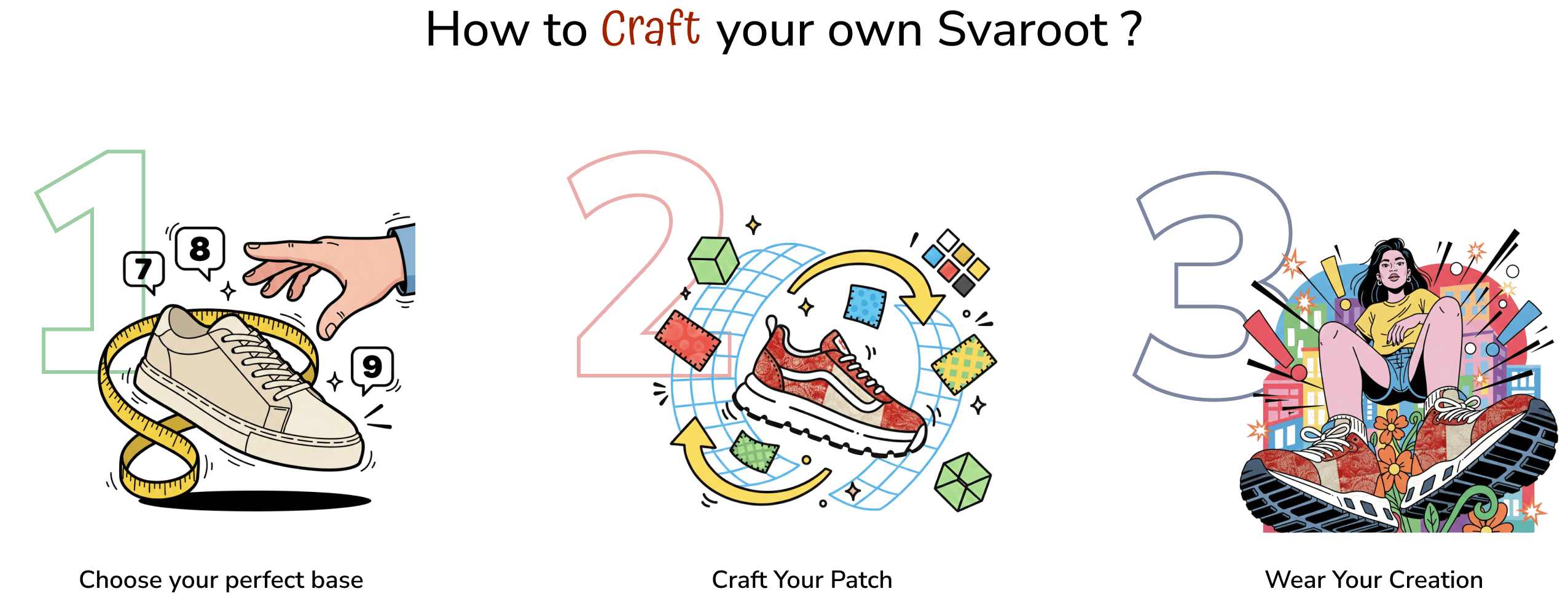
03. Collaborative Branding & Visual Identity
To bring Svaroots to life digitally, I needed a visual foundation that balanced traditional Indian craft with modern e-commerce usability.
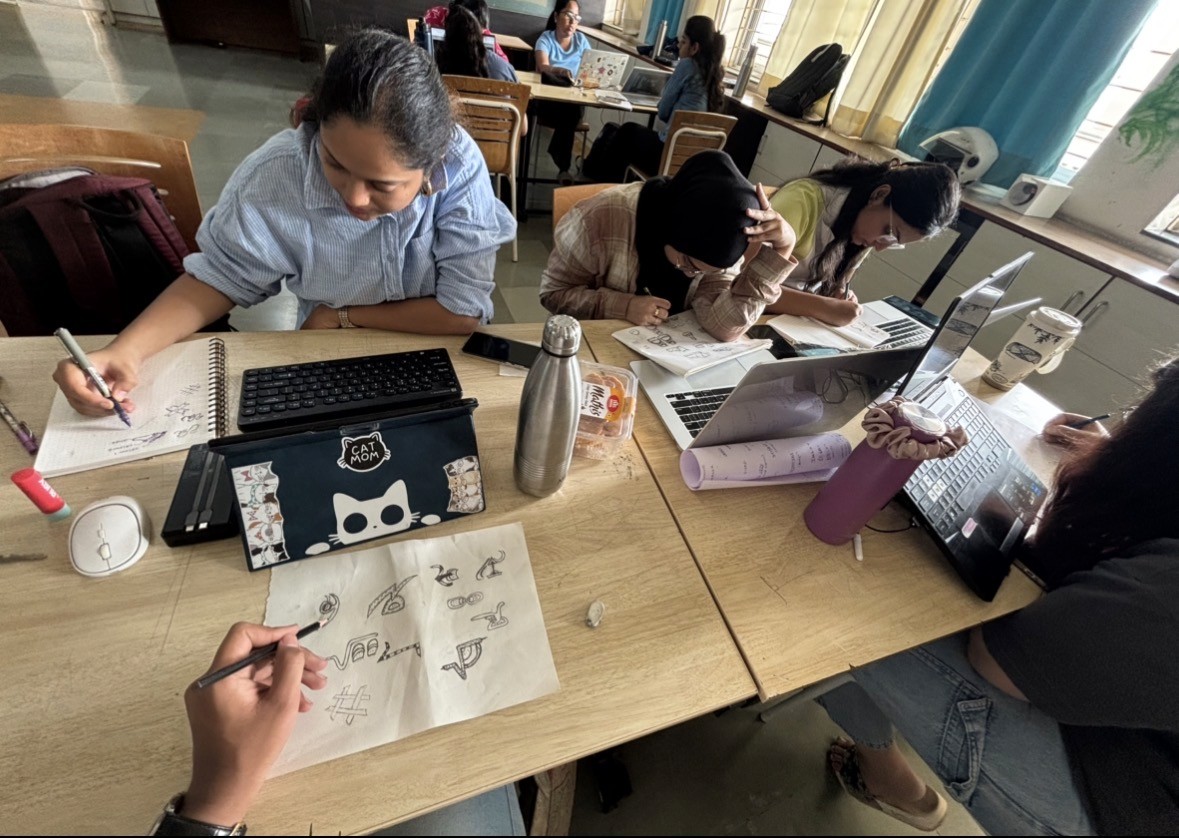
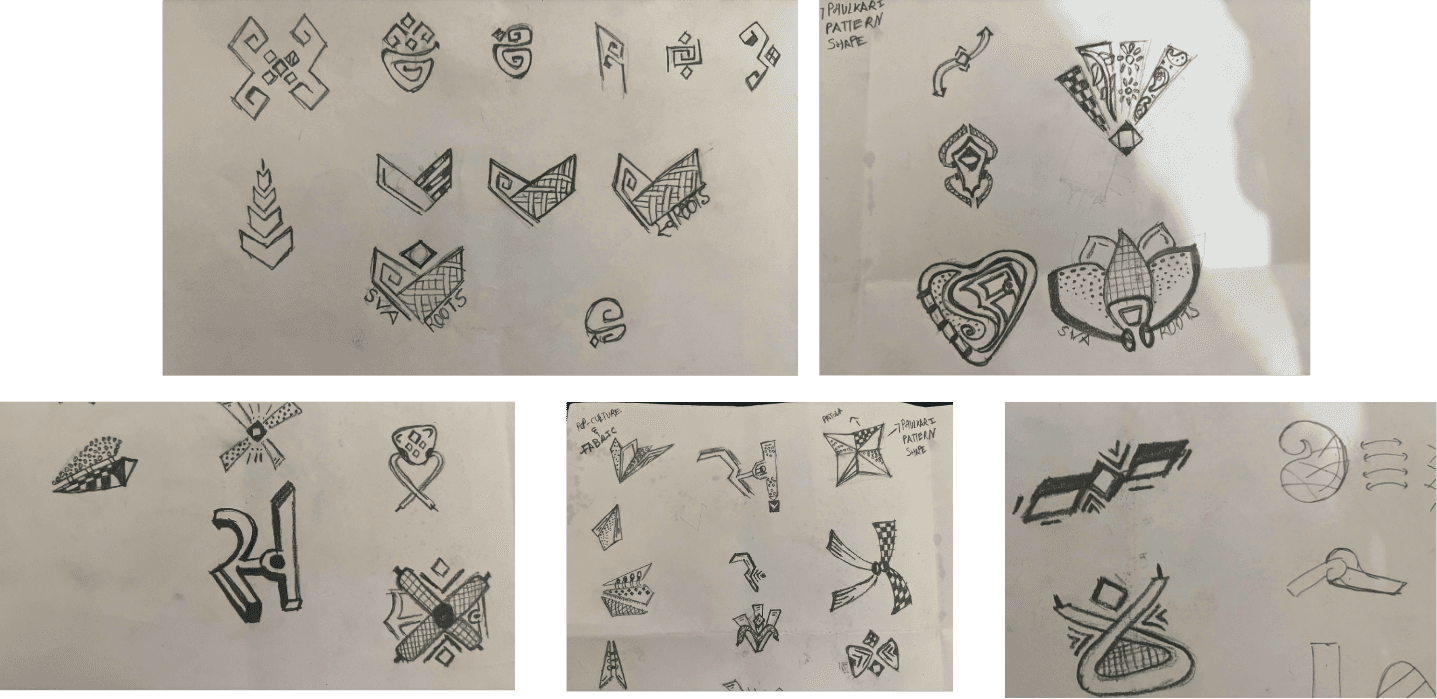
Logo Explorations:
Final Logo:
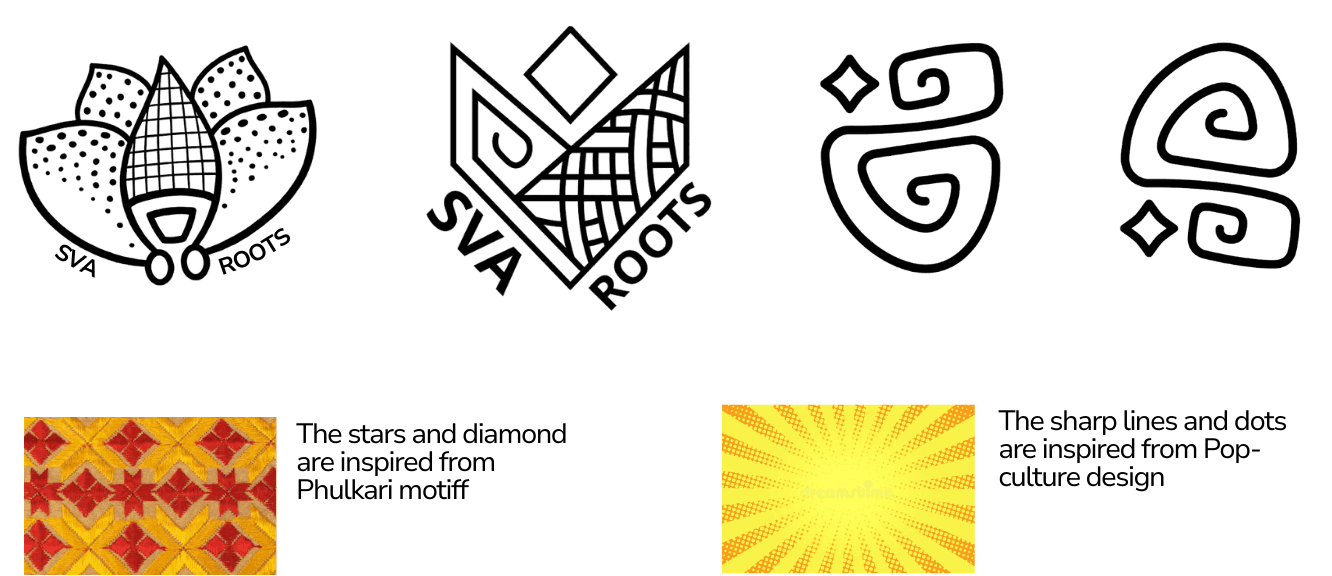
Our logo uses a spiral to represent self-expression, shaped as a shoe print to reflect sneakers as a personal medium for expression. Combined with a traditional Indian motif and enclosed within a patch form, the mark reflects cultural identity and the reversible patch system of the brand.
Primary Logo
Secondary Logo
Secondary Logo

Submark

Favicon

Core Colors:
Our brand color palette is meant to bridge marketing communications and product interface in order to enhance familiarity and visual recognition.
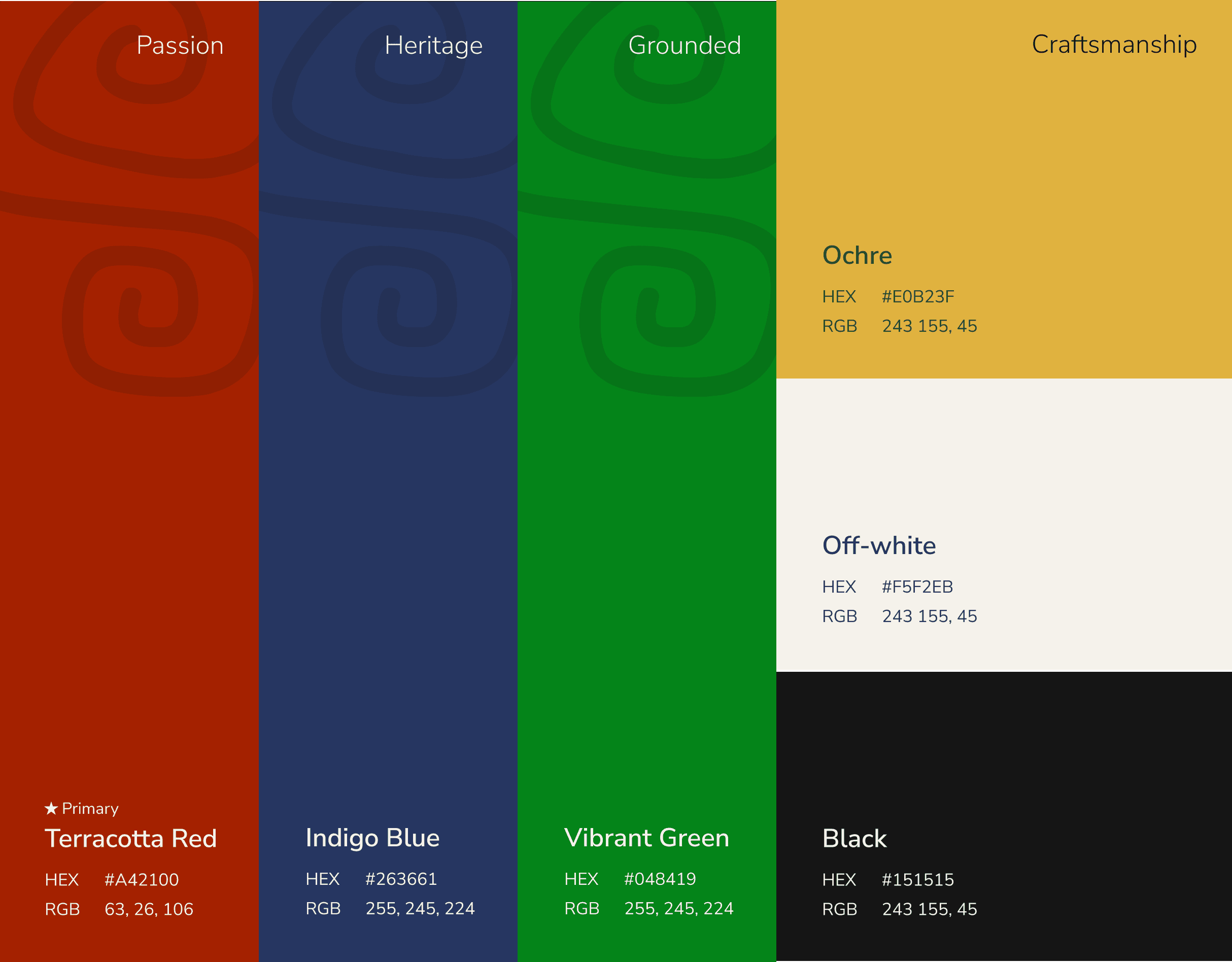
Represents the "Trend." It is the color of the global urban landscape, bold, fast-paced, and modern. It signifies the energy of self-expression and the "Manhattan" ambition of the brand.
Represents the "Traditional." A deep, reliable tone that mirrors the historical Indigo dyes used in Indian textiles. It anchors our innovative Velcro-patch system in authenticity and craft.
Used to highlight versatility and sustainability, the bottle green adds balance to the palette while reinforcing the brand’s connection to craft, adaptability, and mindful self-expression.
View Full Brand Guidelines & Style Guide (PDF)

05. Information Architecture
06. Foundational Design System
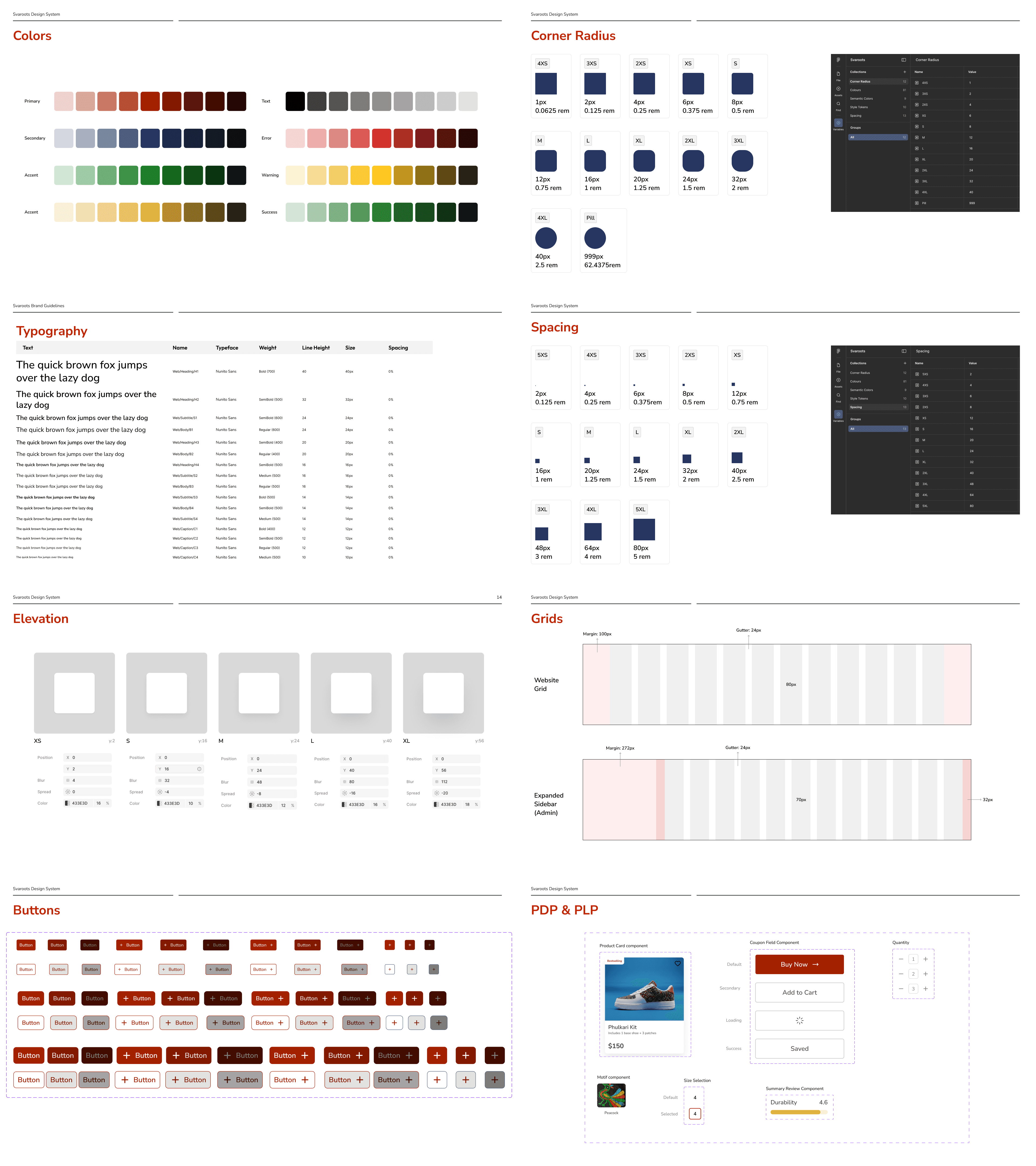
07. Website Design
Home Page

Customization Page (3D Lab)
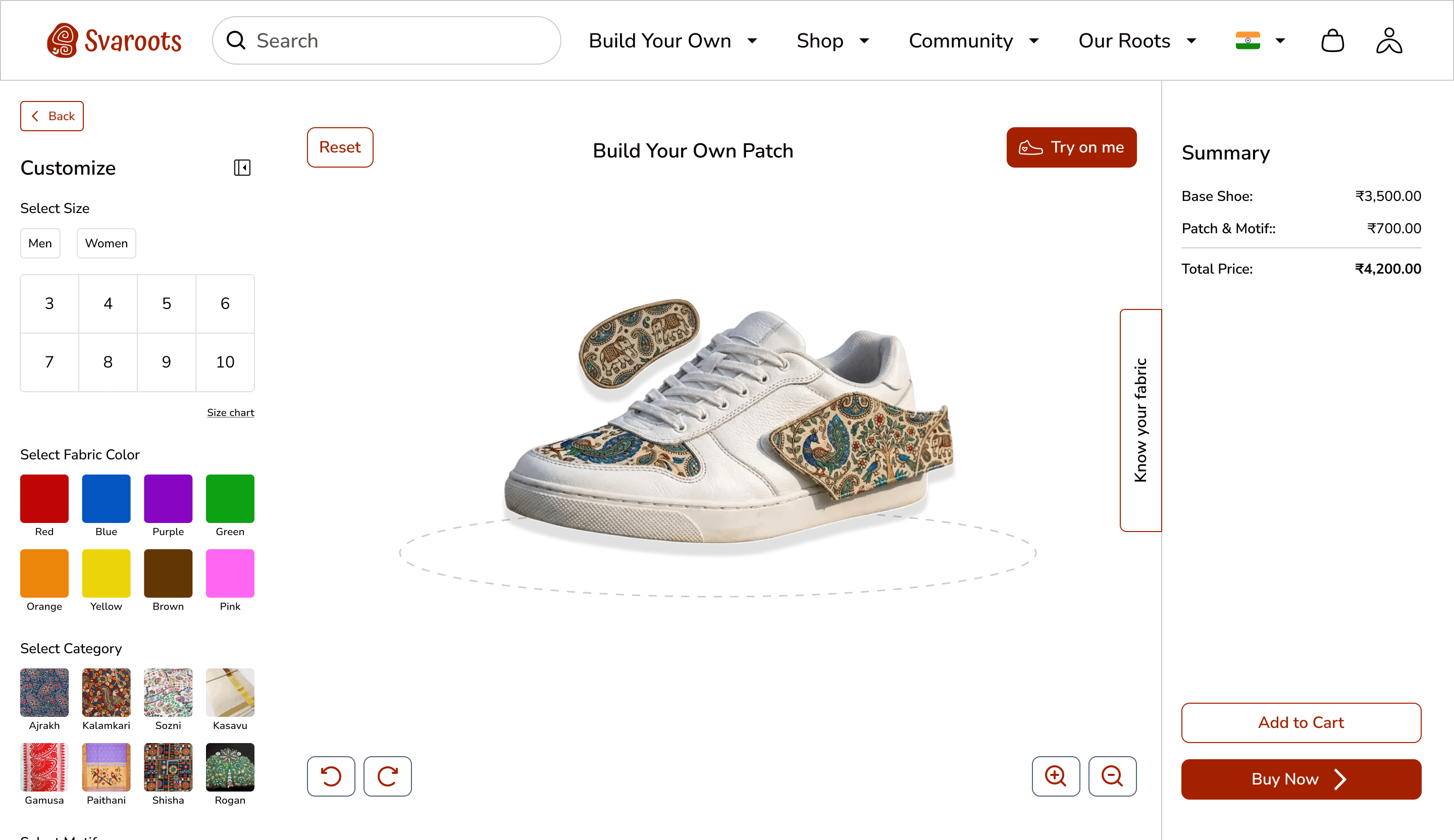
Our Artisans Screen

08. Dashboard Design
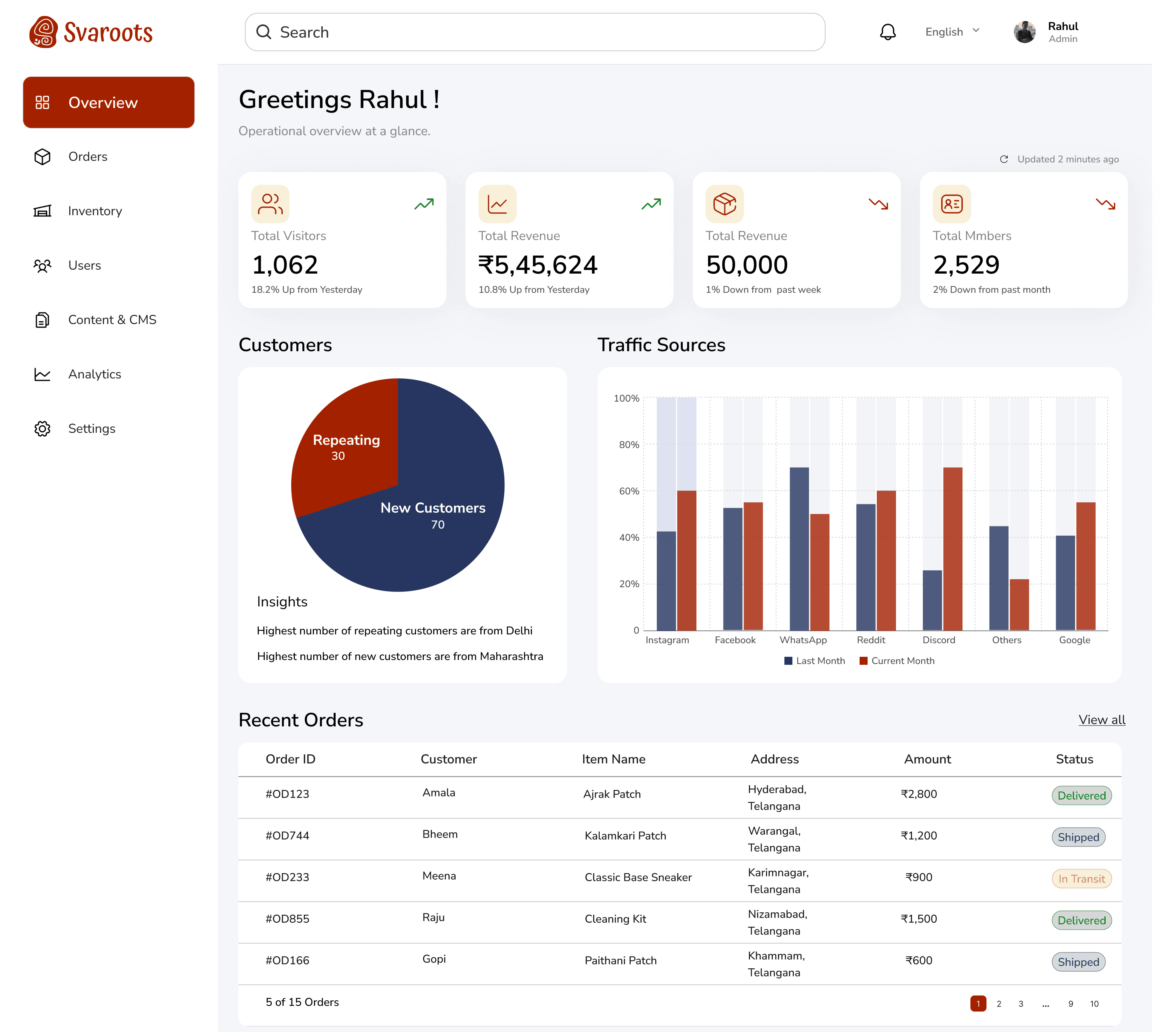
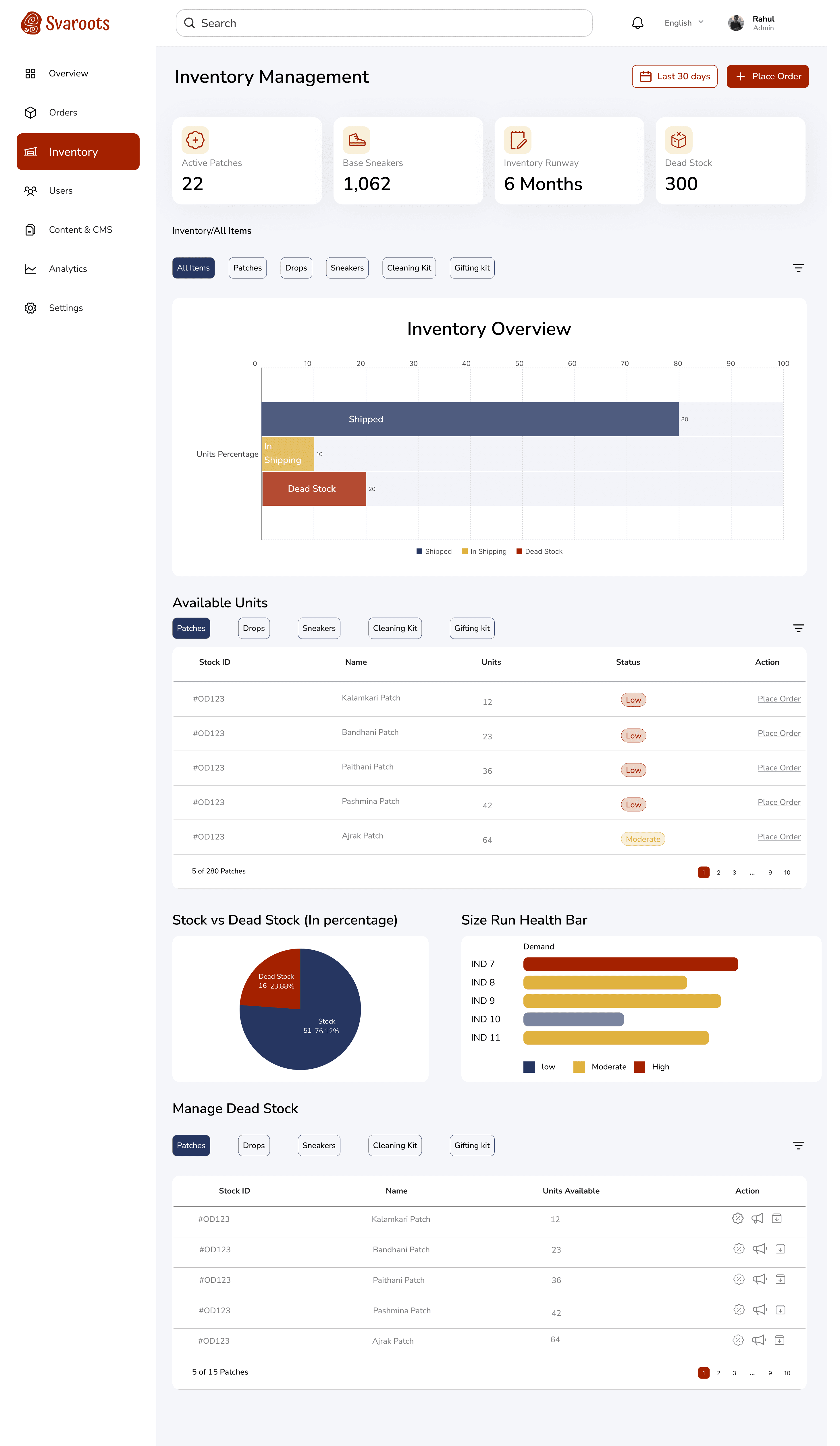
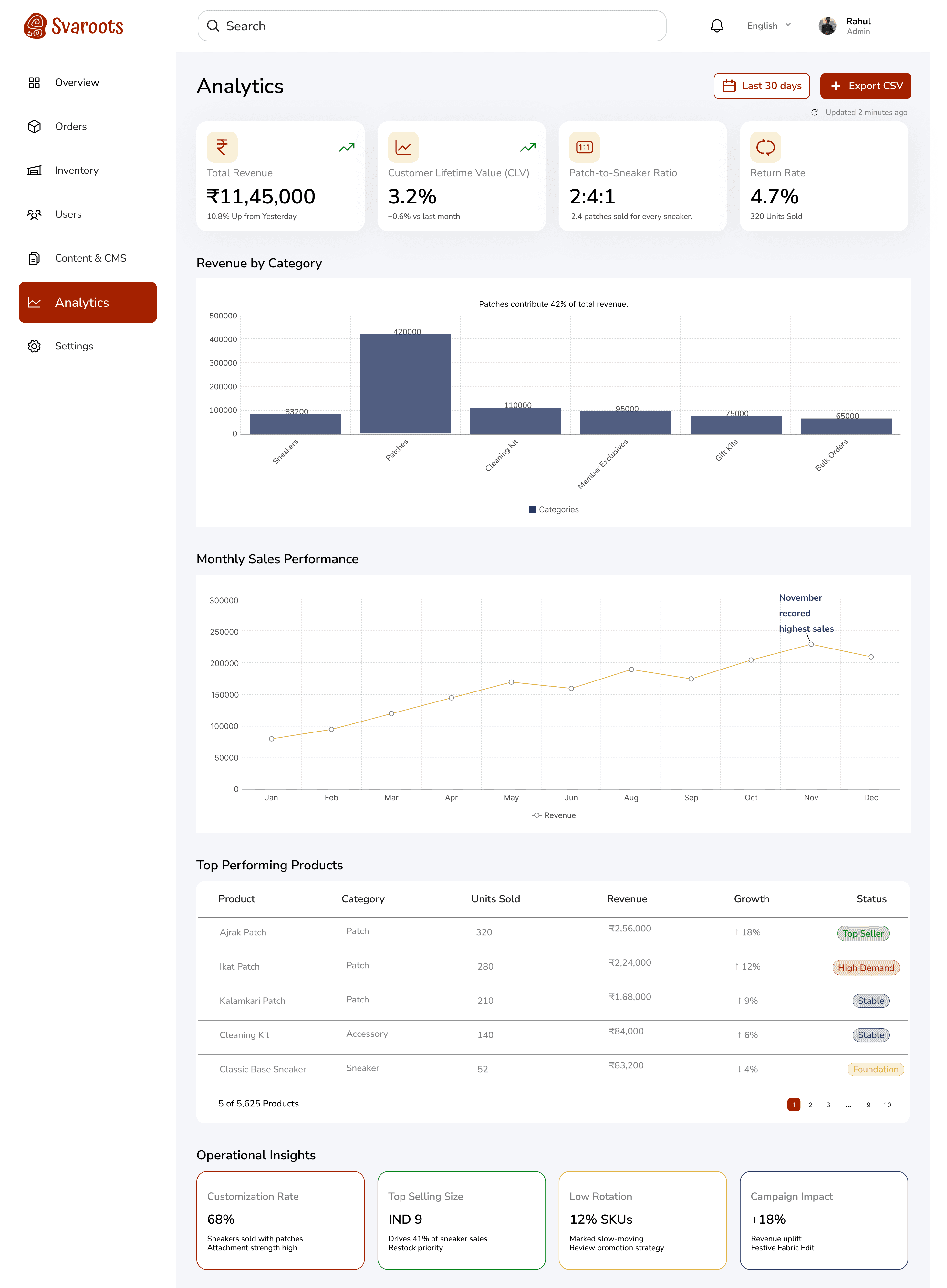
I designed a comprehensive Content & CMS Dashboard to handle end-to-end operations.
Overview Page
Inventory Management Page
Analytics Page
Click here for Working Prototype
09. Key Learnings
Taking Svaroots from zero to one taught me that a beautiful UI cannot hide a broken system. Bridging the gap between the B2C consumer customizer and the B2B admin dashboard proved that successful product design requires viewing the platform as a living ecosystem. Hand-coding the MVP solidified my belief that the best design decisions are made when you deeply understand both business strategy and technical constraints.